


Saham News
Bank Stocks Under Pressure from Foreign Selling-Risk or Buying Opportunity?
/index.php
Crypto News - Posted on 28 March 2026 Reading time 5 minutes
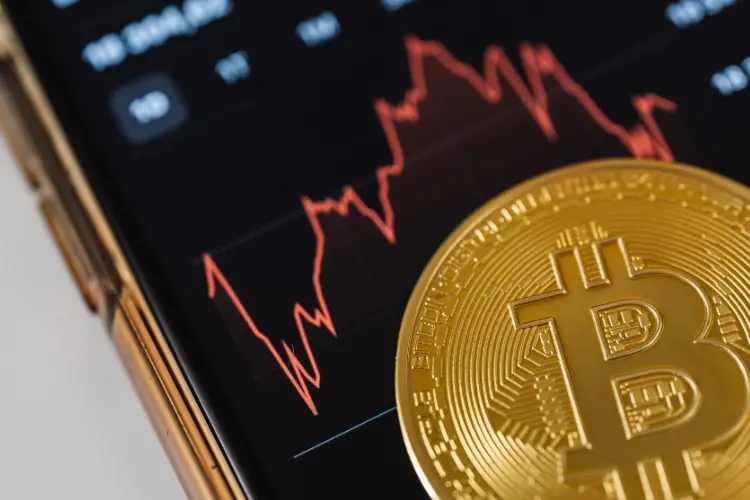
Bitcoin has fallen sharply once again. During trading on March 28, 2026, the value of the world's largest cryptocurrency plunged to $65,000 per BTC — a correction that arrived against the backdrop of escalating global geopolitical tensions that have shown no signs of easing. A broad wave of selling swept simultaneously across multiple risk assets, and the cryptocurrency market was not spared.
This decline marks the opening of a new chapter of volatility for Bitcoin, which had previously been trading within a relatively stable trend. Yet the moment global uncertainty surged to a new peak, investors moved in a direction that has become thoroughly familiar: shedding risk assets and seeking refuge in instruments regarded as safer, such as the U.S. dollar and government bonds. Bitcoin, in this context, fell squarely into the first category to be offloaded.
There is a compelling irony at play here. For years, Bitcoin has frequently been championed as an alternative safe haven, a store of value at times of global turbulence. Reality on the ground, however, tells a different story. In conditions of genuinely extreme crisis, cryptocurrencies tend to be pulled along by the current of correction rather than swimming against it. Intensifying liquidity pressure and a risk-off sentiment that has come to dominate global markets have rendered that narrative considerably less convincing, at least for the time being.
From a macroeconomic standpoint, pressure has also arrived from a familiar direction: global interest rate policy that remains firmly in restrictive territory. These conditions have continued to narrow the available space for liquidity across the broader market, and high-volatility assets such as Bitcoin are invariably the first to feel the effects whenever that liquidity tap begins to tighten.
Compounding the situation was a domino effect that unfolded across the derivatives market. As Bitcoin's price slid to the $65,000 level, heavily leveraged positions that could no longer withstand the drawdown were immediately subjected to large-scale forced liquidations. That wave of liquidations, in turn, accelerated the selling pressure and deepened the correction far more rapidly than would have been likely under normal market conditions.
This episode reinforces, once again, something that has long been understood: Bitcoin has not yet fully freed itself from the influence of global macro dynamics. Geopolitics, monetary policy, and market sentiment still maintain a firm grip on its price movements. The digital gold narrative continues to live on in long-term discussions, but within the shorter-term horizon, Bitcoin continues to move in step with the broader currents of market sentiment not against them.
On the other hand, not all market participants view this correction as unwelcome news. A segment of institutional investors regards a sharp decline of this nature as precisely the kind of moment they have been waiting for. In previous cryptocurrency cycles, correction phases triggered by external sentiment shocks have frequently served as strategic entry points for large-scale players, before prices ultimately recovered and resumed their upward trajectory.
That said, caution cannot be set aside. For as long as geopolitical conflicts have yet to show genuine signs of resolution and global uncertainty continues to define the prevailing mood in the market, Bitcoin is expected to remain in motion within an unpredictable pattern, carrying the potential for sharp fluctuations that could arrive from any direction, at any time.
What do you think about this topic? Tell us what you think. Don't forget to follow Digivestasi's Instagram, TikTok, Youtube accounts to keep you updated with the latest information about economics, finance, digital technology and digital asset investment.
DISCLAIMER
All information contained on our website is summarized from reliable sources and published in good faith and for the purpose of providing general information only. Any action taken by readers on information from this site is their own responsibility.
SHARE
VIEW