




Saham News
Bareksa Analysts Pick PSAB and BBCA, Here's Their Outlook for the IHSG
/index.php
Berita Terkini - Posted on 26 March 2026 Reading time 5 minutes
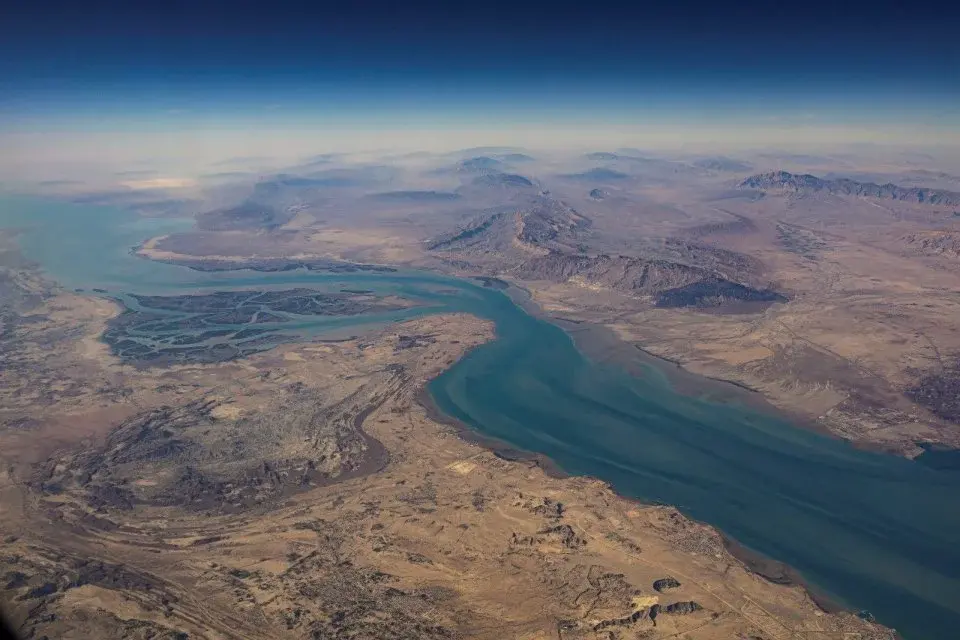
The conflict in the Gulf region has now entered its fourth week. As long as Iranian attacks on vessels continue and the Strait of Hormuz remains closed, roughly one-fifth of global oil and liquefied natural gas (LNG) production is being held back and cannot reach international markets.
This means market participants are constantly recalculating how much global energy supply will be lost this year. The greater the expected shortfall, the higher energy prices are likely to rise.
Brent crude prices have eased to around $99 per barrel as of Wednesday (March 25, 2026, 14:57 WIB). Previously, on March 19, prices had surged to $119 per barrel, about 76% higher than pre-war levels. Meanwhile, European gas prices have jumped by 85%.
Energy prices have not risen even further because investors still expect supply flows to normalize soon.
According to Société Générale, cited by The Economist, there are still more market positions betting on price declines (put options) than on price increases (call options) for deliveries from July onward.
Taking shipping delays into account, this suggests investors are still hoping conditions will stabilize by May.
However, The Economist estimates that even if Iran complies with Donald Trump’s threat on March 21, 2026, to reopen the strait within 48 hours—an outcome that remains uncertain—global oil and gas markets would still face supply shortages for months, weighing on the global economy.
The first issue lies in production. Due to export constraints and limited storage, Gulf countries have collectively cut oil output by 10 million barrels per day.
This represents about 10% of global production and 40% of their pre-war output.
Restarting production is not immediate. Producers must first ensure facilities are operational, clear pipelines, and gradually restart wells to avoid damaging reservoir pressure. Then, initial processing units such as separators, compressors, and treatment plants must also be brought back online, all of which takes time.
Although Gulf producers are accustomed to adjusting output quickly as OPEC members, this cut is far deeper and more abrupt than usual. Experts estimate recovery will take two to four weeks.
To rebalance energy markets after the Strait of Hormuz reopens, three steps are required: restoring production, transporting supplies to overseas refineries, and processing them into usable fuels. Each stage takes time.
Gas markets are even more complex. Qatar’s Ras Laffan facility, which supplies nearly one-fifth of global LNG, has been shut since March 2, 2026, following Iranian drone attacks. Missile strikes have also damaged two of its 14 liquefaction units, equivalent to 17% of capacity and 3% of global supply.
Qatar’s Energy Minister stated repairs could take three to five years, while expansion plans are delayed. Even facilities with minor damage may require weeks of repairs before restarting.
After repairs, equipment must be dried to prevent cracking when cooled to minus 160°C. If done too quickly, uneven contraction could damage structures. This process alone may take up to seven weeks.
Shipping presents another challenge. Even with a ceasefire, captains of around 480 stranded vessels are likely to wait several days without attacks before sailing.
Although the Strait of Hormuz can handle heavy traffic and backlogs could clear in about two weeks, security concerns may deter vessels from returning immediately.
Iran has attacked port infrastructure, including fuel tanks, warehouses, and docked ships. Additionally, damaged infrastructure and sunken vessels may need removal first, while port repairs could take months.
Insurance is another obstacle. War-risk coverage has largely been withdrawn, and premiums have surged from 0.2–0.4% to 1% or more, reaching up to 10% for high-risk routes.
Even if insurance becomes available again, shipowners and crews may remain hesitant. Evidence of this is seen in the Red Sea, where tanker traffic remains far below normal despite reduced threats.
Further delays arise because many tankers are currently positioned in the wrong regions. When the conflict began, vessels shifted to the Atlantic and will likely complete existing voyages before returning, a process that can take up to 90 days.
Even when Gulf crude reaches refineries, shortages will not immediately end. Several refineries in Asia have shut down due to feedstock shortages, reducing throughput by about 3 million barrels per day or 8%.
Restarting operations requires weeks to months, including system inspections, restoring utilities, and gradually reheating processing units. LNG terminals face similar challenges.
Therefore, even if the war ends immediately, global energy markets may need around four months to approach normal conditions.
Global oil output is expected to fall about 3% below target, while each month of Ras Laffan’s closure results in a loss of roughly 7 million tonnes of LNG. Even with full recovery, supply could remain 4% below demand.
The consequences are severe. Global oil inventories will continue to decline, potentially triggering panic buying and price spikes. Competition for LNG is also likely to intensify once the last shipments from Qatar are delivered.
This situation risks disrupting energy stockpiling ahead of winter.
For now, markets are still hoping for a turnaround. However, even if the conflict ends, energy logistics will not recover quickly, and the effects are likely to persist well into the northern hemisphere winter.
Source: cnbcindonesia.com
What do you think about this topic? Tell us what you think. Don't forget to follow Digivestasi's Instagram, TikTok, Youtube accounts to keep you updated with the latest information about economics, finance, digital technology and digital asset investment.
DISCLAIMER
All information contained on our website is summarized from reliable sources and published in good faith and for the purpose of providing general information only. Any action taken by readers on information from this site is their own responsibility.
SHARE
VIEW