






Saham News
IHSG Still in the Red, But These Stocks Are Worth Watching-Opportunities Amid Pressure
/index.php
Berita Terkini - Posted on 28 January 2026 Reading time 5 minutes
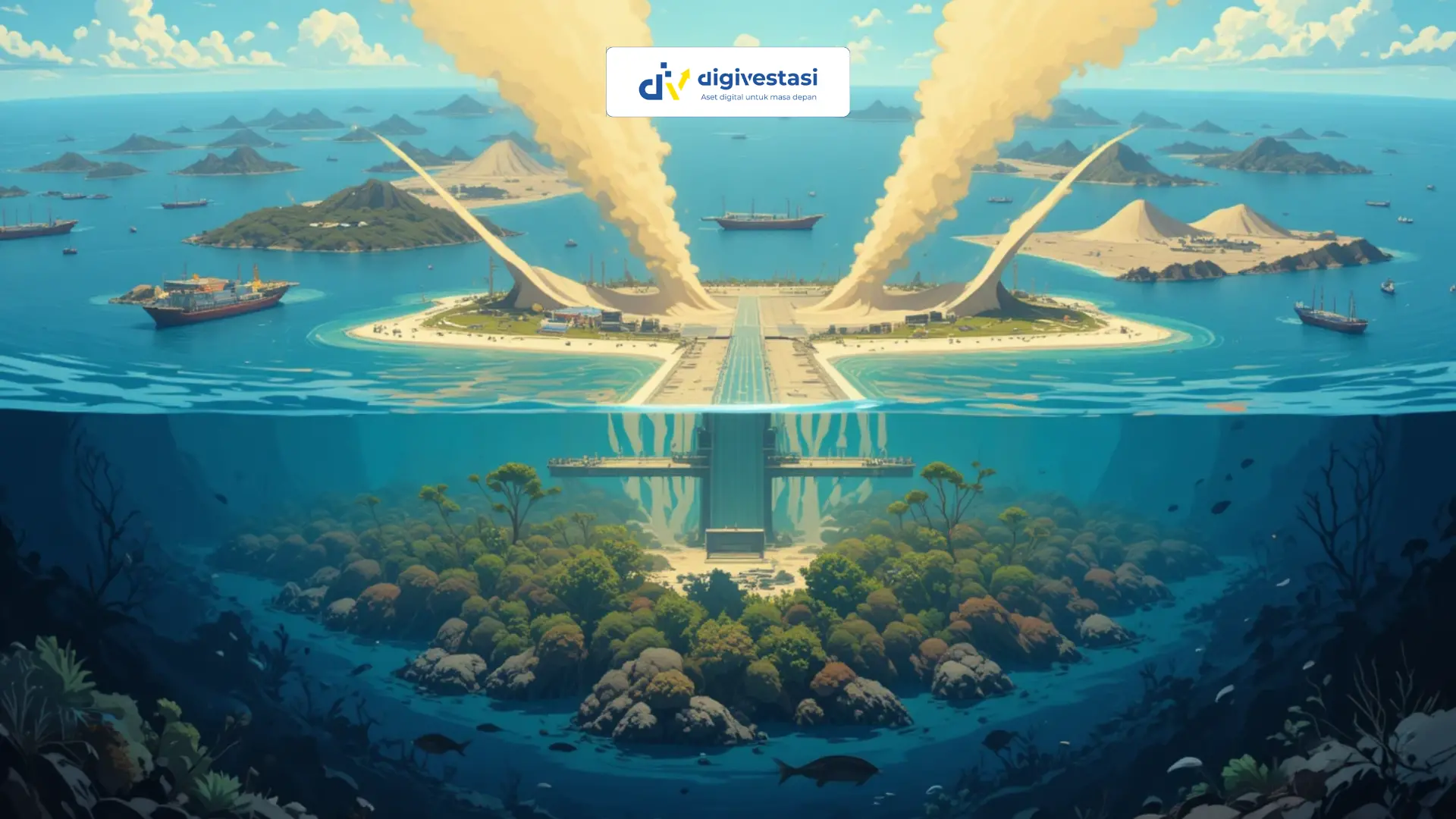
Creating new land in the middle of a vast ocean within a short time sounds like science fiction. Yet China has turned that notion into reality in the South China Sea. Over the past decade, the country has transformed submerged coral reefs into massive artificial islands at a remarkable pace. Behind the advanced engineering lies an extreme approach and severe environmental consequences beneath the sea surface.
According to a report by the Times of India, the key to China’s operation is its highly aggressive dredging technology. The country deploys state-of-the-art cutter suction dredgers, such as Tian Kun Hao, capable of cutting through rock-hard seabeds and pumping the material to the surface.
These vessels operate like enormous vacuum cleaners. Sand, coral fragments, and seabed sediment are sucked up and then sprayed through massive pipelines onto shallow reef areas. With millions of cubic meters of material involved, China has been able to create land large enough to support airport runways in just a matter of months.
While the feat represents a significant technical achievement, the ecological damage it causes is extensive and deeply concerning. Large-scale sand spraying generates thick clouds of sediment throughout the water.
Marine scientists explain that this sediment acts like smog for underwater life. It blocks sunlight essential for seagrass meadows and coral reefs to photosynthesize. When the sediment eventually settles, it buries and suffocates living corals, cuts off oxygen flow, and kills organisms that have developed over thousands of years.
Many marine biologists warn that the destruction is irreversible. Coral reefs are living structures that grow extremely slowly, only a few centimeters per year. Once an entire reef ecosystem is buried under millions of tons of sand and concrete, its chances of recovery within a human lifetime are nearly nonexistent.
Beyond destroying habitats for thousands of fish species, these artificial islands also alter natural ocean currents. Such changes disrupt the movement of fish larvae and the distribution of nutrients across the region, ultimately threatening food security for millions of people in neighboring countries who rely on marine resources.
From above, the islands appear as impressive symbols of modern engineering and strategic power. Below the waterline, however, the reality is far darker. Building artificial islands in ecologically sensitive waters carries environmental costs far greater than what is visible on the surface.
This assessment is based on research conducted by the Earth Island Institute, which continues to monitor the dramatic changes in the region. While the artificial land China has built may endure for generations, the marine ecosystems destroyed beneath the sea may never return.
Source: detik.com
What do you think about this topic? Tell us what you think. Don't forget to follow Digivestasi's Instagram, TikTok, Youtube accounts to keep you updated with the latest information about economics, finance, digital technology and digital asset investment.
DISCLAIMER
All information contained on our website is summarized from reliable sources and published in good faith and for the purpose of providing general information only. Any action taken by readers on information from this site is their own responsibility.
SHARE
VIEW