





Saham News
IHSG Still in the Red, But These Stocks Are Worth Watching-Opportunities Amid Pressure
/index.php
Berita Terkini - Posted on 29 December 2025 Reading time 5 minutes
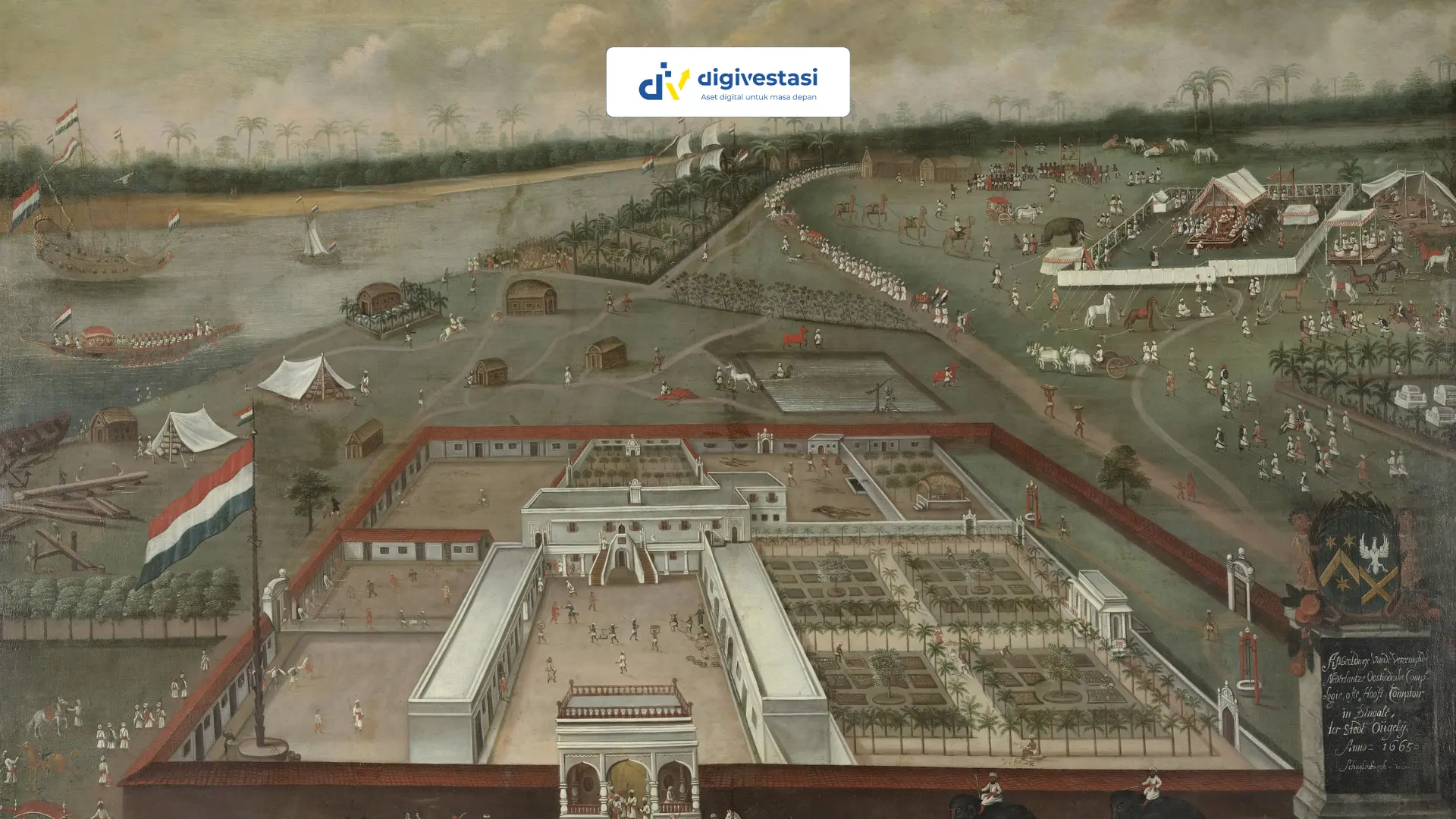
As the year draws to a close, history recalls the collapse of the largest company ever recorded. It was neither a modern technology giant nor a global banking institution, but a legendary Dutch trading enterprise known as the Vereenigde Oostindische Compagnie (VOC). After nearly two centuries of dominance and control over global trade, the company ultimately fell victim to a timeless disease that remains relevant today—widespread internal corruption.
Founded by the Dutch Crown on March 20, 1602, the VOC served as the primary instrument for exploiting Asian territories, particularly the Indonesian archipelago. From the region, the company extracted valuable spices and sold them at high prices in European markets. In a short period, the VOC rose to become a global economic powerhouse.
The authority wielded by the VOC far exceeded that of a typical corporation. It had the power to mint its own currency, maintain a military force, negotiate diplomatic treaties, and even determine the fate of local kingdoms. For this reason, many modern scholars describe the VOC as the largest company in history, with an estimated valuation of US$8.2 trillion—surpassing the combined value of contemporary giants such as Apple, Microsoft, and Meta.
That valuation, however, has been debated. Lodewijk Petram, author of The World’s First Stock Exchange (2014), estimated the VOC’s value at around US$1 billion. Nonetheless, he emphasized that even this figure was extraordinarily high by 17th-century standards.
Unfortunately, the company’s golden age did not last. By the early 1700s, signs of internal decay had become evident. Historian M.C. Ricklefs, in A History of Modern Indonesia (1999), identified poor financial governance as the core reason behind the VOC’s decline.
The VOC engaged in numerous territorial expansion wars. Once the conflicts ended, it established supervisory offices across various regions, all of which required substantial funding. Ironically, these operational funds became a breeding ground for corruption among company officials, both Dutch and local.
Historian C.R. Boxer, in Jan Compagnie (1983), described corruption within the VOC as highly systematic. Regional revenues were frequently siphoned off. When Batavia demanded a contribution of 15,000 ringgit, local officials might inflate the report to 30,000 ringgit, pocketing the difference.
In addition, many VOC employees openly defied company rules by conducting private trade. Company ships were used to transport personal goods rather than official cargo, while extortion of indigenous populations became commonplace.
Ong Hok Ham, in From Priayi Issues to Nyi Blorong (2002), explained that corruption spread from top to bottom largely because VOC employees were paid extremely low wages. Most workers came from impoverished backgrounds in Europe, hoping to achieve wealth in the colonies. When those hopes were dashed, corruption became the easiest alternative.
As a result, many officials lived lavishly while the company’s finances deteriorated. At the same time, the VOC faced intense competition from other foreign trading companies. Expenses soared, revenues declined, and investors began to withdraw their support.
The VOC attempted to survive by relying on loans. However, its deeply flawed governance meant that debt only delayed the inevitable. Finally, on the eve of the new year—December 31, 1799—the Dutch government officially declared the VOC bankrupt and dissolved the company.
Thus ended the story of a corporation that had dominated global trade for 197 years. All of its assets and liabilities were taken over by the state. In its place, the Dutch government established a new colonial administration known as the Dutch East Indies across the former VOC territories.
History records one final irony. The VOC is no longer remembered as the Vereenigde Oostindische Compagnie, but mockingly referred to as Vergaan Onder Corruptie—“collapsed due to corruption.” This dark legacy is often cited as one of the earliest roots of systemic corruption in Indonesia.
Source: cnbcindonesia.com
What do you think about this topic? Tell us what you think. Don't forget to follow Digivestasi's Instagram, TikTok, Youtube accounts to keep you updated with the latest information about economics, finance, digital technology and digital asset investment.
DISCLAIMER
All information contained on our website is summarized from reliable sources and published in good faith and for the purpose of providing general information only. Any action taken by readers on information from this site is their own responsibility.
SHARE
VIEW