






Saham News
Bareksa Analysts Pick PSAB and BBCA, Here's Their Outlook for the IHSG
/index.php
Berita Terkini - Posted on 01 March 2026 Reading time 5 minutes
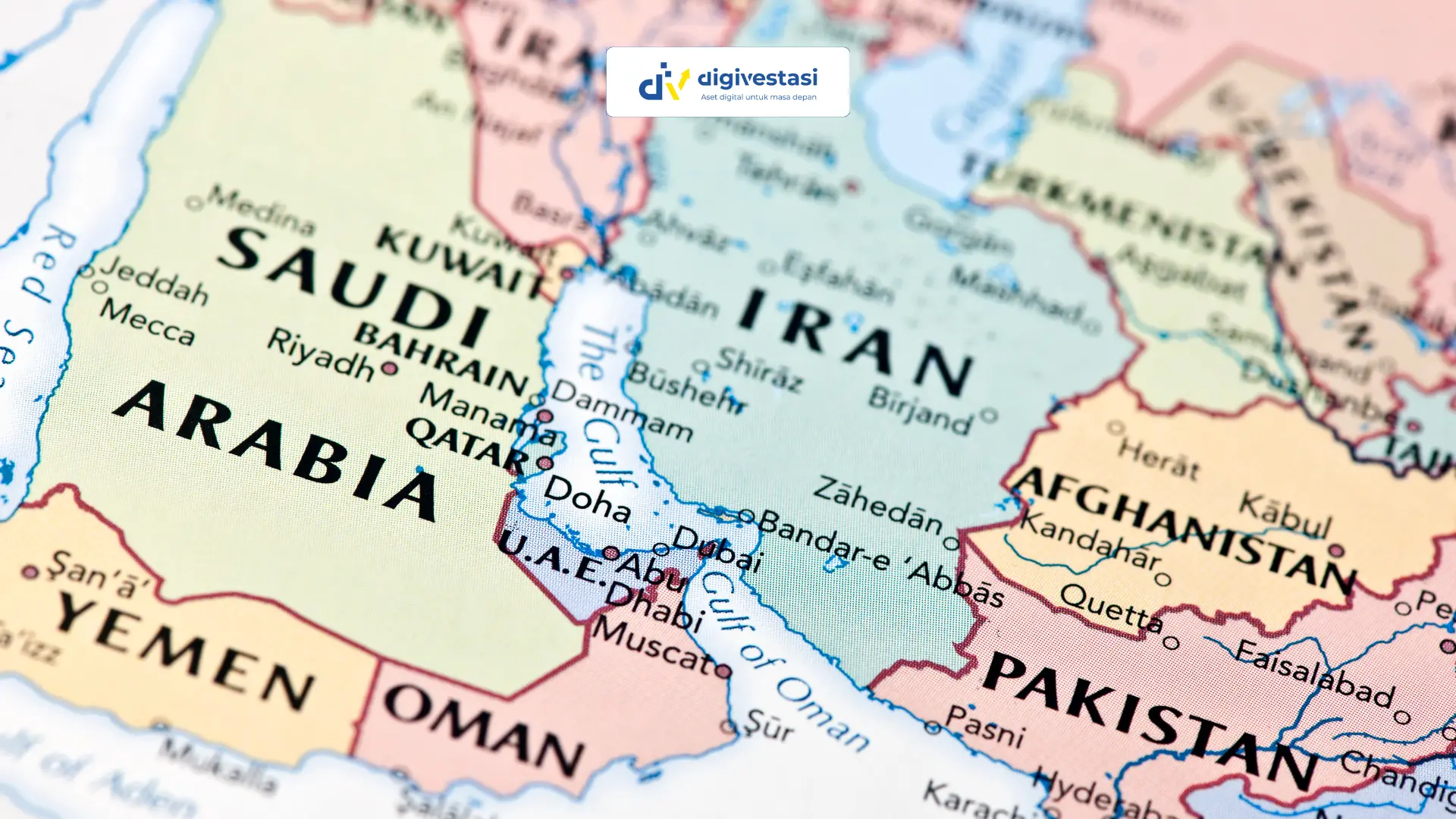
The coordinated strikes carried out by the United States and Israel against Iran, followed by retaliatory resistance, have further underscored that the Middle East has entered a phase of open warfare after weeks of escalating tensions among the countries involved.
From a global economic perspective, the conflict has pushed oil prices higher. This is understandable given that Iran accounts for roughly 5% of global crude oil production.
In addition, about 20% of the world’s oil flows through the Strait of Hormuz, which lies adjacent to Iran. Any threat to this narrow and strategic passage immediately increases risk premiums in energy markets and drives prices upward.
According to Bloomberg, Jean-Charles Gordon, Senior Director of Vessel Tracking at Kpler, an energy research firm, stated that hundreds or even thousands of ships have experienced navigation disruptions since Friday, when Israel launched a surprise attack on Iran.
He noted that the latitude and longitude coordinates received by vessels were inaccurate. Maritime traffic data showed abnormal and imprecise ship positions.
He explained that military-grade spoofing devices interfered with vessel positioning services, causing navigation systems to display incorrect locations. This situation raises the risk of collisions, although ships typically have backup navigation systems.
Bloomberg Economics estimates that the conflict could escalate further and trigger a sharp rise in crude oil prices. In a worst-case scenario where the Strait of Hormuz is completely closed, oil prices could surge to as high as US$108 per barrel.
This projection is based on analysis suggesting that Iran still retains the capacity to retaliate and that its decision-makers remain unified.
So far, Iran’s targets have included US military bases in the region and Israel. However, Tehran could expand its focus to regional energy infrastructure and shipping routes, either directly or through allied groups.
A Bloomberg Economics report dated March 1, 2026, assessed that Iran’s response is likely to intensify. Although Iran cannot match US military superiority, it could impose significant costs and attempt to draw the US into a prolonged regional conflict.
If oil prices were to climb to that level, the impact would go beyond psychological effects. Such conditions could create a mild stagflationary shock globally, characterized by energy-driven inflation, higher logistics costs, and mounting uncertainty that dampens investment as markets shift toward a risk-off stance.
For reference, oil prices stood at US$72.48 per barrel on February 27, up from US$70.75 per barrel the previous day.
Economic Impact
In global financial markets, surging oil prices combined with geopolitical uncertainty typically strengthen the US dollar and push up bond yields in emerging markets due to higher risk premiums. Consequently, capital outflows from emerging economies become difficult to avoid.
Indonesia would not be immune to such developments, especially given the current weakness in its domestic real sector and its reliance on foreign capital inflows. This is reflected in Indonesia’s Balance of Payments, which has been supported by a surplus in the capital and financial account, as reported by Bank Indonesia.
Regarding the rupiah, which is highly sensitive to external factors and domestic fundamentals, these conditions could lead to depreciation, particularly if oil prices spike sharply alongside global market volatility.
For example, on June 19 last year, a tanker collision in the Strait of Hormuz drove oil prices up to US$78.85 per barrel. By June 23, the rupiah had weakened to Rp16,485 per US dollar from Rp16,300 on June 18, a day before the incident.
This movement illustrates how sensitive exchange rates are to energy sentiment and global geopolitical risk. Within days, markets repriced regional risk, pushing oil higher while weakening emerging market currencies, including the rupiah.
Should Bloomberg Economics’ extreme scenario materialize—with oil reaching US$108 per barrel due to severe disruption in the Strait of Hormuz—the impact on Indonesia would extend beyond financial markets to its external balance and fiscal position.
Nevertheless, not all scenarios are pessimistic. If disruptions in the Strait of Hormuz prove temporary and do not halt global oil flows, prices may be contained within the US$80–90 per barrel range. In such a case, pressure on the rupiah would likely reflect short-term sentiment rather than structural weaknesses.
Moreover, Indonesia retains several buffers, including relatively adequate foreign exchange reserves, Bank Indonesia’s currency stabilization policy mix, and the potential for higher prices of other commodities to offset some of the increased oil import costs. If coal and alternative energy prices also rise, export revenues could help sustain Indonesia’s external balance.
Source: bloombergtechnoz.com
What do you think about this topic? Tell us what you think. Don't forget to follow Digivestasi's Instagram, TikTok, Youtube accounts to keep you updated with the latest information about economics, finance, digital technology and digital asset investment.
DISCLAIMER
All information contained on our website is summarized from reliable sources and published in good faith and for the purpose of providing general information only. Any action taken by readers on information from this site is their own responsibility.
SHARE
VIEW