
Saham News
Bank Stocks Under Pressure from Foreign Selling-Risk or Buying Opportunity?
/index.php
Berita Terkini - Posted on 31 March 2026 Reading time 5 minutes
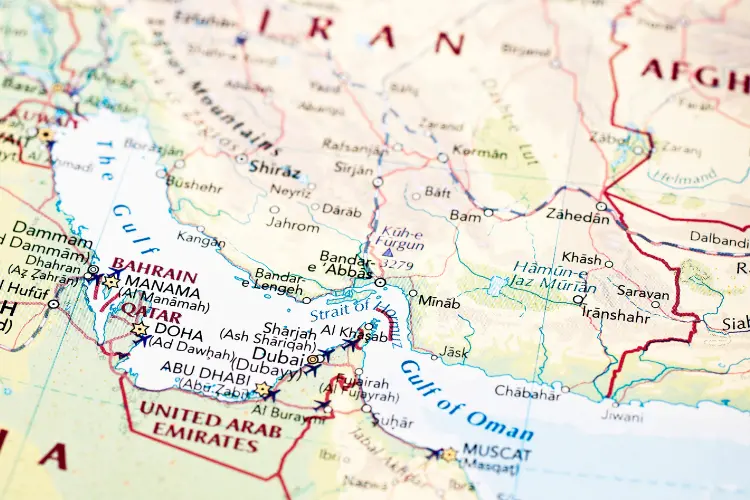
United States President Donald Trump has declared his readiness to bring the military campaign against Iran to an end a statement that was immediately interpreted by markets as a signal of de-escalation amid continuously intensifying global pressure. Yet at the same moment, the Strait of Hormuz, the waterway that sustains approximately one-fifth of the world's oil supply, has been reported as still experiencing operational disruptions that have not yet fully normalized. These two realities, unfolding in parallel, produce a picture that is far from straightforward.
Trump's statement did bring a measure of relief, at least at the level of sentiment. Following a period of heightened tension that had triggered a surge in global energy prices and shaken confidence in the stability of the world economy, a signal of willingness to negotiate from Washington was something many parties had been waiting for. But a market sufficiently seasoned in experience understands that political declarations and ground-level reality do not always move in the same rhythm.
The Strait of Hormuz is an irreplaceable chokepoint. Each day, approximately 20 percent of the world's oil supply passes through those narrow waters making it one of the most critical junctions in the entire architecture of global energy trade. When this passage is disrupted, the effects do not take long to materialize: oil prices move, global supply chains tremble, and inflationary concerns begin knocking at the door once again.
This is precisely where the gap between political signaling and on-the-ground reality becomes sharply visible. Analysts have assessed that a decision to halt military operations does not automatically restore calm if the logistical impediments within the Strait of Hormuz have not been genuinely resolved. Market sentiment may well improve in the near term and that is by no means a trivial development but the underlying structural risks have not gone anywhere.
The combination of a peace signal and ongoing distribution disruptions has created a dynamic that is difficult to read with any confidence. Oil prices carry the potential to remain elevated for longer than anticipated. Global inflation will struggle to decline rapidly when energy costs continue to be pushed upward. Equity markets and risk assets will continue to wrestle with volatility that arrives in successive waves. Even Bitcoin and other digital assets which are sensitive to shifts in global liquidity and changes in investor risk appetite cannot fully insulate themselves from the shocks emanating from this direction.
Trump's move to halt military operations could serve as the first door opening toward more substantive diplomatic negotiations. That is a possibility that must not be underestimated. However, without a full restoration of access through the Strait of Hormuz, energy markets and the global economy cannot yet draw a genuine breath of relief. Volatility, in its various forms, is likely to remain a companion across multiple asset classes in the period ahead.
What lies deeper than all of this is a lesson that modern geopolitical history continues to repeat: the stability of the world is not determined solely by decisions made at negotiating tables or from presidential podiums. It is also and perhaps equally determined by who holds control over the strategic infrastructure that keeps the world in motion.
What do you think about this topic? Tell us what you think. Don't forget to follow Digivestasi's Instagram, TikTok, Youtube accounts to keep you updated with the latest information about economics, finance, digital technology and digital asset investment.
DISCLAIMER
All information contained on our website is summarized from reliable sources and published in good faith and for the purpose of providing general information only. Any action taken by readers on information from this site is their own responsibility.
SHARE
VIEW