



Saham News
Bareksa Analysts Pick PSAB and BBCA, Here's Their Outlook for the IHSG
/index.php
Bisnis | Ekonomi - Posted on 26 March 2026 Reading time 5 minutes
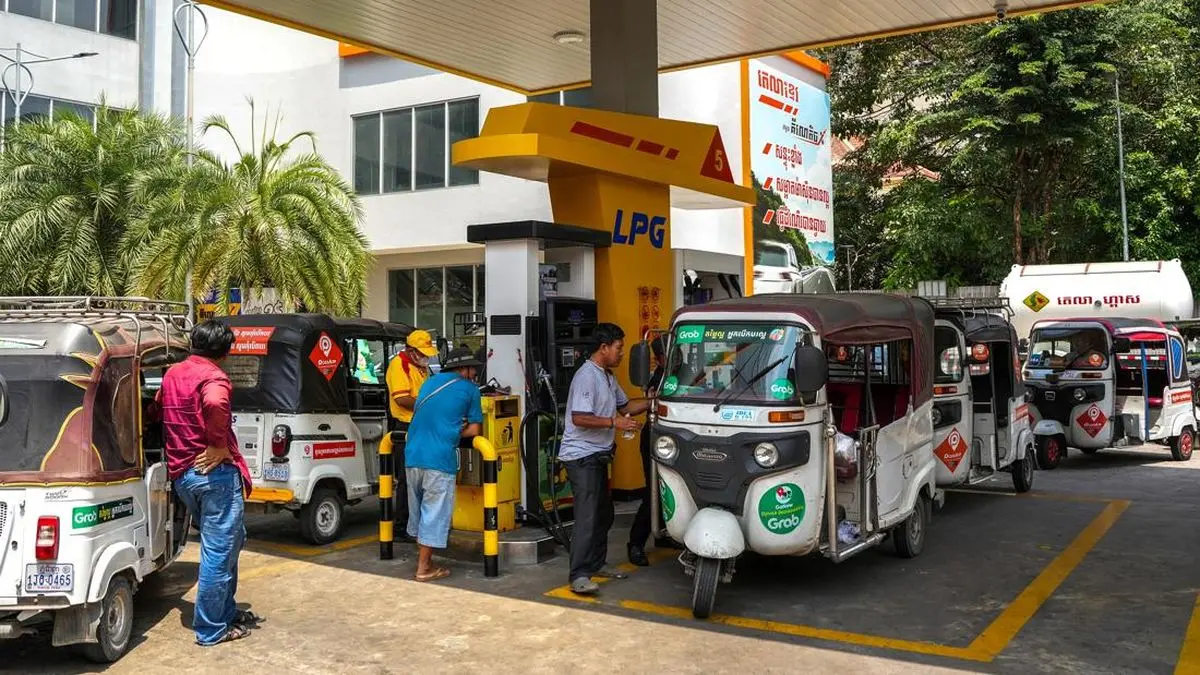
Several countries around the world have raised fuel prices over the past month as a consequence of the conflict between Iran and the United States (US) along with Israel.
According to Al Jazeera, the surge in fuel prices across many nations has been driven by disruptions in global oil and gas distribution, particularly along the Strait of Hormuz, which has nearly ceased operations. This route is a critical channel for energy supplies from the Gulf region to the rest of the world.
Data from Global Petrol Prices shows that the increase in fuel prices is not confined to a single region but has spread globally. The sharpest increases have been recorded in Asia and developing countries that heavily depend on energy imports.
Japan and South Korea are among the most vulnerable due to their high reliance on imports, with Japan sourcing around 95% of its oil from the Gulf region and South Korea about 70%.
To maintain energy stability, Japan has instructed its oil storage facilities to prepare for releasing strategic reserves, while South Korea has imposed price caps on gasoline and diesel for the first time in 30 years.
In South Asia, the pressure on energy supply is even more severe. Pakistan and Bangladesh are facing fiscal constraints along with limited energy reserves.
In Pakistan, government offices are now operating only four days a week, schools have been closed, and a 50% work-from-home policy has been implemented to reduce fuel consumption. Meanwhile, Bangladesh has ordered all public and private universities to shut down temporarily to conserve energy.
Indonesia is also among the countries experiencing fuel price increases. The price of RON 95 gasoline, or Pertamax, has risen by 4.24%, from Rp11,800 per liter in February to Rp12,300 per liter this month.
Other Asian countries such as Pakistan, Maldives, Australia, Singapore, China, Myanmar, Afghanistan, and Sri Lanka have also recorded fuel price hikes.
Similar increases have occurred in the Middle East and Central Asia, including the United Arab Emirates, Turkey, Hong Kong, Taiwan, Malaysia, South Korea, Qatar, Bhutan, Kazakhstan, Japan, Jordan, and Kyrgyzstan.
Across other regions, countries such as Puerto Rico, Germany, Guatemala, Seychelles, Sierra Leone, Lebanon, Spain, Austria, Sweden, Luxembourg, Zimbabwe, Ukraine, San Marino, and Albania have also raised fuel prices.
Further increases have been reported in Denmark, North Macedonia, Moldova, Panama, Ethiopia, Belgium, France, the Democratic Republic of the Congo, Bulgaria, the Dominican Republic, Burundi, Liberia, Italy, Egypt, Norway, Switzerland, Latvia, Greece, and Suriname.
Other affected countries include Monaco, Aruba, Peru, Argentina, Andorra, Montenegro, Portugal, Curaçao, Romania, Liechtenstein, Jamaica, Grenada, Israel, Serbia, Brazil, the United Kingdom, Iceland, Cyprus, Honduras, and New Zealand.
Additionally, El Salvador, Bosnia and Herzegovina, Costa Rica, Tanzania, Mauritius, Mozambique, Lithuania, Slovenia, Ghana, Barbados, Georgia, Morocco, Nicaragua, Rwanda, and Tunisia have also seen fuel price increases.
In the United States, regular gasoline prices have risen by about 20%, from an average of $2.94 per gallon in February to $3.58 per gallon.
In some states, prices have even exceeded $4 per gallon, while in California they have surpassed $5 per gallon, the highest level in more than two years.
This sharp rise in global oil prices is expected to push up global food prices, as energy plays a crucial role throughout the supply chain—from fertilizer production and manufacturing to distribution.
Low-income countries are considered the most vulnerable, as households allocate a larger portion of their spending to food and many nations remain dependent on imports of key commodities such as wheat and fertilizers.
The following are the top 10 countries with the highest fuel price increases:
Cambodia: up 67.81%
Vietnam: up 49.73%
Nigeria: up 35.02%
Laos: up 32.94%
Canada: up 28.36%
Pakistan: up 24.49%
Maldives: up 18.54%
Australia: up 18.23%
United States: up 16.55%
Singapore: up 15.69%
Source: cnnindonesia.com
What do you think about this topic? Tell us what you think. Don't forget to follow Digivestasi's Instagram, TikTok, Youtube accounts to keep you updated with the latest information about economics, finance, digital technology and digital asset investment.
DISCLAIMER
All information contained on our website is summarized from reliable sources and published in good faith and for the purpose of providing general information only. Any action taken by readers on information from this site is their own responsibility.
SHARE
VIEW