





Saham News
Bank Stocks Under Pressure from Foreign Selling-Risk or Buying Opportunity?
/index.php
Bisnis | Ekonomi - Posted on 09 March 2026 Reading time 5 minutes
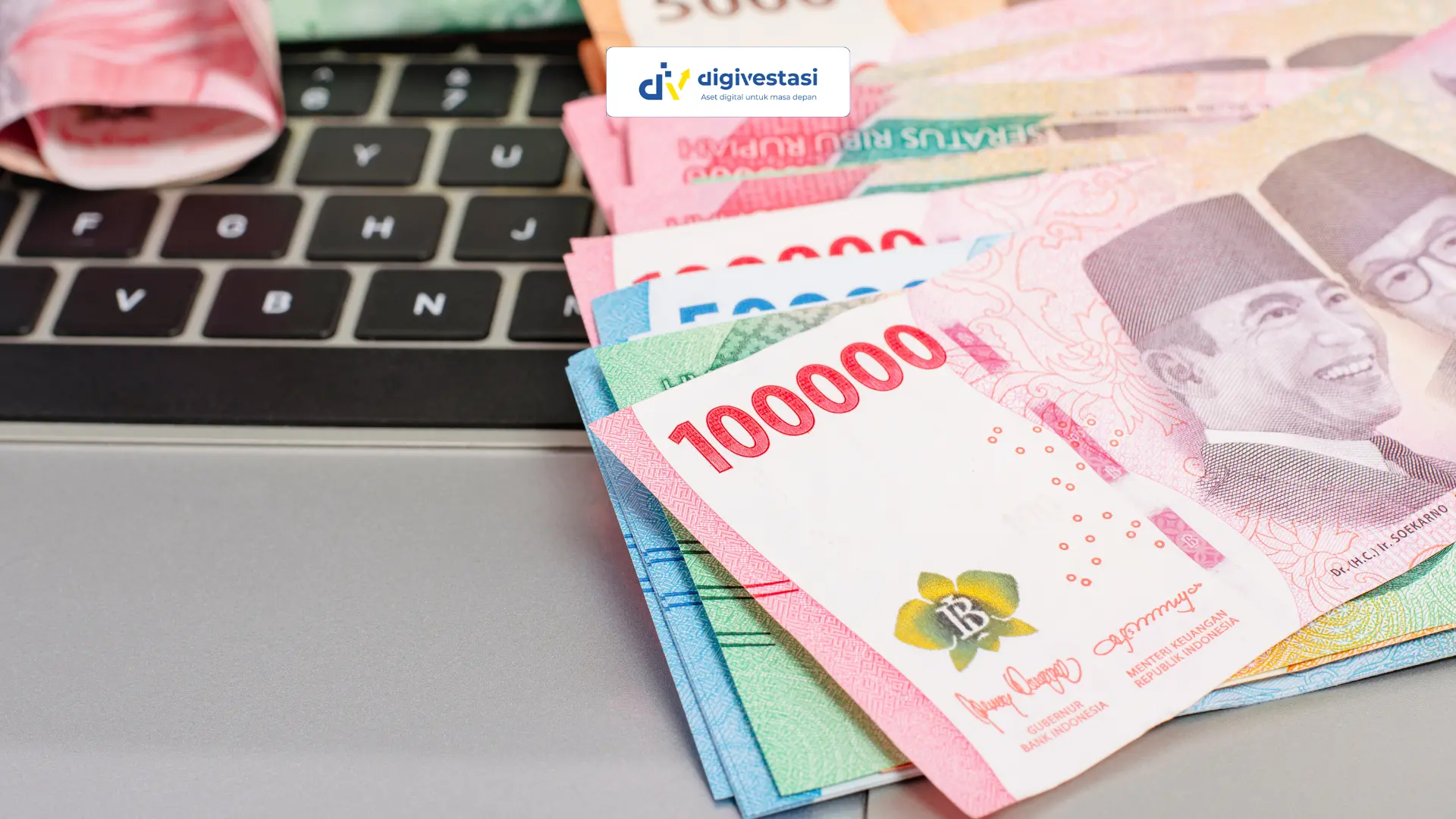
The rupiah exchange rate against the US dollar surpassed the Rp17,000 per US dollar level during trading on Monday (March 9, 2026). At the same time, the Jakarta Composite Index (JCI) also showed weakness, declining by nearly 5 percent.
The sharp decline in both the rupiah and the JCI was triggered by the escalating conflict in the Middle East, which has created turmoil in financial markets.
“The JCI has fallen by about 5 percent, while the rupiah has reached Rp17,000 per US dollar. Several factors are influencing this situation, including both external and internal elements,” said currency and commodities analyst Ibrahim Assuaibi in a voice statement to journalists on Monday (April 9, 2026).
Ibrahim explained that from the external perspective, tensions related to the war in the Middle East are still ongoing. Iran has appointed a new leader, Mojtaba Khamenei, to replace Ayatollah Khomeini, who died following an attack by Israel and the United States some time ago. According to him, Mojtaba’s leadership style resembles that of the previous Ayatollah, indicating that resistance or conflict is likely to continue.
“There has been a leadership transition in Iran, and we see that the new leader is also a fundamentalist Islamic figure. Therefore, it is highly likely that the conflict in the Middle East will continue over the next six months,” he said.
US President Donald Trump has even declared that he intends to destroy or replace the current regime in Iran. This situation has significantly heightened tensions in the Middle East, especially after the closure of the Strait of Hormuz. Several oil-producing countries such as the United Arab Emirates, Iraq, and Saudi Arabia have also reduced their production due to the closure of this strategic route.
“The reduction in production has caused global crude oil prices, both crude and Brent, to surge sharply. Currently, prices are around 117 US dollars per barrel. Many analysts believe that crude oil prices could reach 200 US dollars per barrel if the Middle East crisis is not resolved within the next month,” he explained.
On the other hand, Ibrahim noted that the United States and Israel may face considerable difficulties if they attempt to seize Iranian territory through ground warfare, as Iran’s terrain is dominated by mountainous areas. He referred to historical examples such as the Korean War, where the United States and its ally South Korea failed to achieve victory despite a ceasefire eventually being reached when China, North Korea’s ally, became involved.
A similar situation occurred during the Vietnam War. Therefore, Trump needs to carefully consider any plan for a ground military operation. Predictions regarding the potential failure of such ground warfare have also pushed oil prices higher, as well as natural gas prices, affecting various related commodities.
“The increase in oil prices could trigger an economic crisis. We saw a similar situation in 2008 when, after the conflict involving the United States and its allies against Iraq, a significant global economic crisis occurred,” he said.
Internal Sentiment
Ibrahim added that internal factors contributing to the weakening of the rupiah and the decline of the JCI are also linked to the geopolitical tensions in the Middle East. He projected that the Indonesian government may face a potential budget deficit due to the surge in global oil prices.
“The government has explained that for the next 20 days fuel prices are expected to remain relatively stable. However, if oil prices exceed 92 US dollars per barrel, that level already represents the highest normal price that the government can still anticipate. Currently, we see that crude and Brent oil prices are above 100 US dollars, reaching around 117 US dollars per barrel. This means the government’s budget deficit could potentially reach about 3.6 percent,” he said.
Ibrahim noted that this information had also been conveyed by Indonesia’s Minister of Finance, Purbaya Yudhi Sadewa. This could mean that the government may need to adjust spending, including possibly reducing the budget allocated to the Free Nutritious Meals (MBG) program.
“This situation creates additional tension and contributes to the uncertainty within the country as a result of external factors,” he said.
In addition, another internal sentiment affecting the market involves calls from several Islamic scholars urging Indonesia to withdraw from the Board of Peace (BoP) initiative proposed by Trump during a meeting between Indonesian President Prabowo Subianto and religious leaders. Based on the meeting, there is a possibility that Indonesia may exit the BoP if the initiative does not align with Indonesia’s stance regarding the Palestinian issue.
“This uncertainty caused a sharp gap-up in the dollar index when the market opened earlier at 06:00. After that, almost all prices weakened, including the rupiah which reached Rp17,000 per US dollar. The JCI also fell by nearly 5 percent earlier, although the decline has now slightly narrowed to around 3.57 percent at the 7,315 level,” he concluded.
Source: republika.co.id
What do you think about this topic? Tell us what you think. Don't forget to follow Digivestasi's Instagram, TikTok, Youtube accounts to keep you updated with the latest information about economics, finance, digital technology and digital asset investment.
DISCLAIMER
All information contained on our website is summarized from reliable sources and published in good faith and for the purpose of providing general information only. Any action taken by readers on information from this site is their own responsibility.
SHARE
VIEW