



Saham News
Bank Stocks Under Pressure from Foreign Selling-Risk or Buying Opportunity?
/index.php
Bisnis | Ekonomi - Posted on 25 March 2026 Reading time 5 minutes
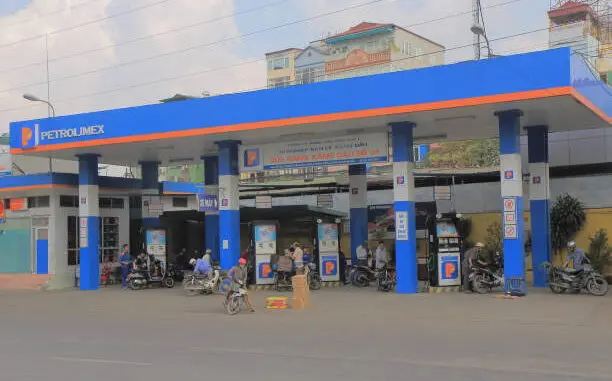
The impact of the war between the United States and Israel against Iran has begun to spread widely to Southeast Asia. Vietnam is now facing the risk of a fuel crisis and has requested assistance from Japan and South Korea to improve access to crude oil amid global supply disruptions caused by escalating tensions in the Middle East.
Citing The Diplomat on Thursday (March 19, 2026), Vietnam’s Deputy Minister of Industry and Trade, Nguyen Hoang Long, made this request on the sidelines of the Energy Security Summit in Tokyo.
In a meeting with Japan’s Vice Minister for International Affairs at the Ministry of Economy, Trade and Industry, Matsuo Takehiko, Long asked Japan to help Vietnam find and access crude oil sources to meet its domestic demand.
This is particularly relevant as Japan is one of the countries with large crude oil reserves and extensive experience in managing national energy stockpiles.
Long also met with South Korea’s Minister of Trade, Industry, and Energy, Kim Jung-Kwan. During the meeting, he requested South Korea’s support in helping Vietnam access crude oil sources to facilitate imports amid the ongoing Middle East conflict that threatens key supply routes.
These requests highlight the severe impact that the Iran conflict with the United States and Israel—showing no signs of ending—could have on Vietnam.
Vietnam has two oil refineries that supply around 70% of its fuel needs, while approximately 87% of its oil imports come from the Middle East, making it highly vulnerable to supply disruptions and price spikes.
The situation is further worsened by the fact that Vietnam’s petroleum buffer is among the lowest in Southeast Asia.
The country holds national reserves equivalent to only nine days of net imports, far below Japan’s 254 days, South Korea’s 208 days, and Thailand and the Philippines at around 60 days.
Most of these reserves are held by major oil trading companies that are required to maintain stock levels for 20 days.
However, these stocks are primarily intended for daily market distribution rather than long-term emergency storage, leaving the government with very limited room to maneuver if the crisis becomes prolonged.
This condition puts Vietnam in a highly vulnerable position if oil prices continue to surge or if the Strait of Hormuz is fully closed.
As a result, the situation could directly affect Vietnam’s ambitious economic growth plans, which rely on stable and affordable energy supplies.
In January, the Vietnamese government set a target for gross domestic product (GDP) growth of 10% per year for the 2026–2030 period, up from an average of 5.7% during 2021–2024.
Such a high target can only be achieved if the industrial, transportation, and household consumption sectors are not disrupted by an energy crisis and rising fuel prices.
Facing an increasingly evident crisis in the third week of the conflict, the Vietnamese government quickly issued firm instructions to its citizens.
People were urged to stay at home unless necessary and were encouraged to use public transportation, cycle, or carpool in order to reduce fuel consumption amid limited supply.
What do you think about this topic? Tell us what you think. Don't forget to follow Digivestasi's Instagram, TikTok, Youtube accounts to keep you updated with the latest information about economics, finance, digital technology and digital asset investment.
DISCLAIMER
All information contained on our website is summarized from reliable sources and published in good faith and for the purpose of providing general information only. Any action taken by readers on information from this site is their own responsibility.
SHARE
VIEW