





Saham News
IHSG Still in the Red, But These Stocks Are Worth Watching-Opportunities Amid Pressure
/index.php
Investasi Digital - Posted on 05 November 2025 Reading time 5 minutes
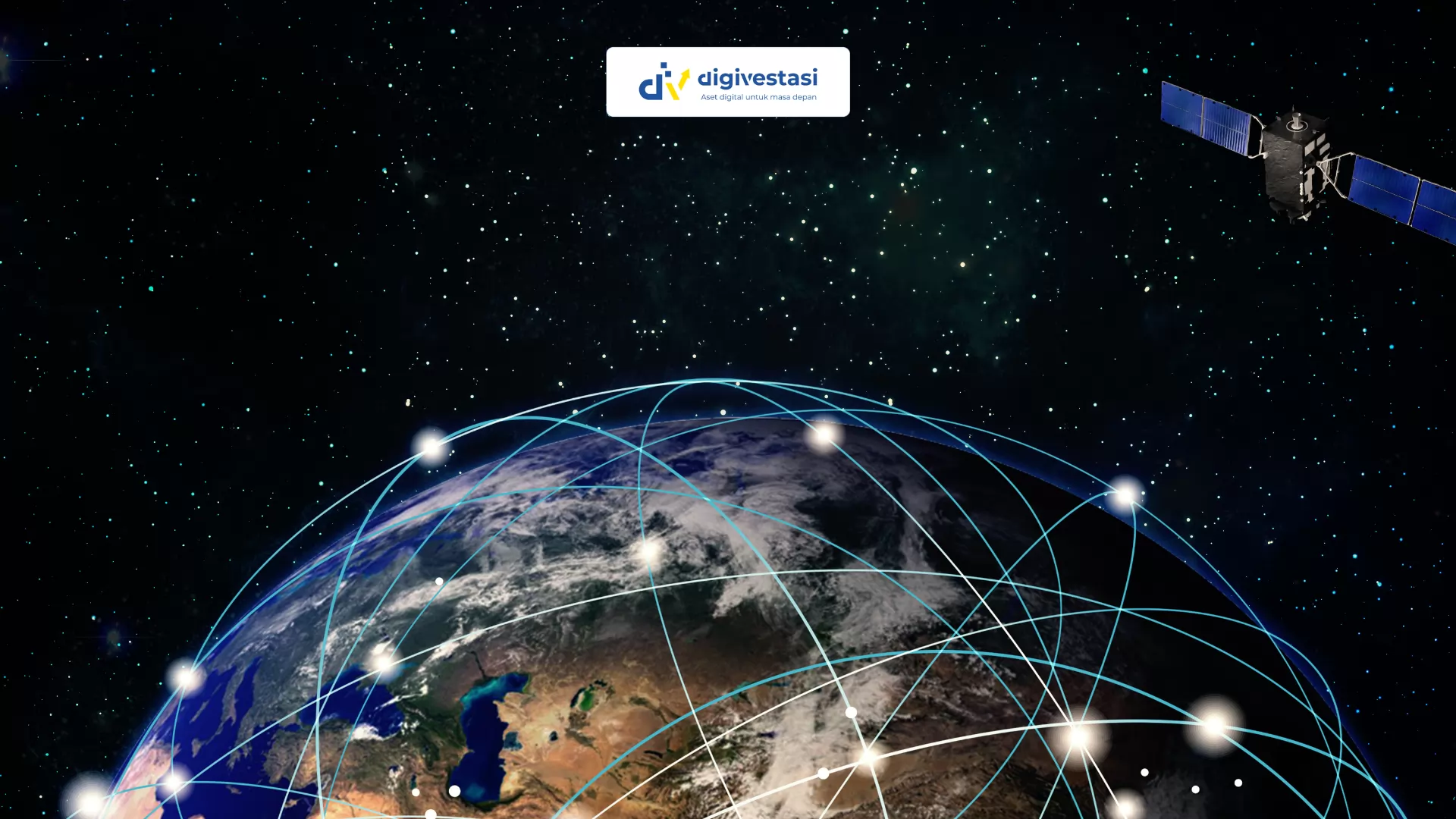
SpaceX’s Starlink satellites have long been recognized as providers of ultra-fast internet connectivity. However, SpaceX CEO Elon Musk has hinted that the Starlink satellite constellation could also be transformed into an orbital data center operating in space.
Building a data center network that operates beyond Earth’s atmosphere is, of course, no simple task. Nevertheless, Musk stated that SpaceX already has the foundation to achieve this vision through its latest generation of Starlink V3 satellites.
“Simply scaling up the Starlink V3 satellites, which are equipped with high-speed laser connections, can make this possible,” Musk wrote in a post on Twitter/X, as cited by ArsTechnica, Monday (November 3, 2025).
“SpaceX will make this happen,” he added.
Currently, SpaceX operates Starlink V2 satellites with a maximum downlink capacity of up to 100 Gbps. The upcoming Starlink V3 is reportedly designed to offer ten times that capacity, reaching 1 Tbps.
The company plans to launch dozens of Starlink V3 satellites using its Starship rocket. Since the Starship vehicle is still undergoing testing, the first launch of Starlink V3 satellites is expected to take place in the first half of 2026.
According to SpaceX’s internal documentation, each Starlink V3 satellite weighs approximately 2,000 kilograms, nearly four times heavier than the Starlink V2 Mini model. Musk’s post also implied that the next generation may be even larger to accommodate the necessary onboard computing capabilities.
The idea of developing data centers in outer space has sparked both enthusiasm and criticism. Supporters argue that such an innovation offers numerous advantages, including limitless solar power and no environmental harm, unlike conventional Earth-based data centers.
Critics, however, claim that the concept is economically impractical, and that its proponents underestimate the technological challenges involved in creating orbital data center infrastructure.
Several other companies have also begun developing space-based data center projects to support artificial intelligence (AI) infrastructure. One example is startup Starcloud, which plans to launch a test satellite carrying Nvidia H100 GPUs to train AI models in orbit.
In May, former Google CEO Eric Schmidt acquired the startup Relativity Space due to his interest in building space-based data centers. Meanwhile, Amazon founder Jeff Bezos recently predicted that such orbital data centers will be established within the next 10 to 20 years.
What do you think about this topic? Tell us what you think. Don't forget to follow Digivestasi's Instagram, TikTok, Youtube accounts to keep you updated with the latest information about economics, finance, digital technology and digital asset investment.
DISCLAIMER
All information contained on our website is summarized from reliable sources and published in good faith and for the purpose of providing general information only. Any action taken by readers on information from this site is their own responsibility.
SHARE
VIEW