



Bussiness | Economy
Purbaya Yudhi Sadewa Rejects Rp514 Trillion Loan from IMF & World Bank-Here's Why
/index.php
Saham News - Posted on 29 December 2025 Reading time 5 minutes
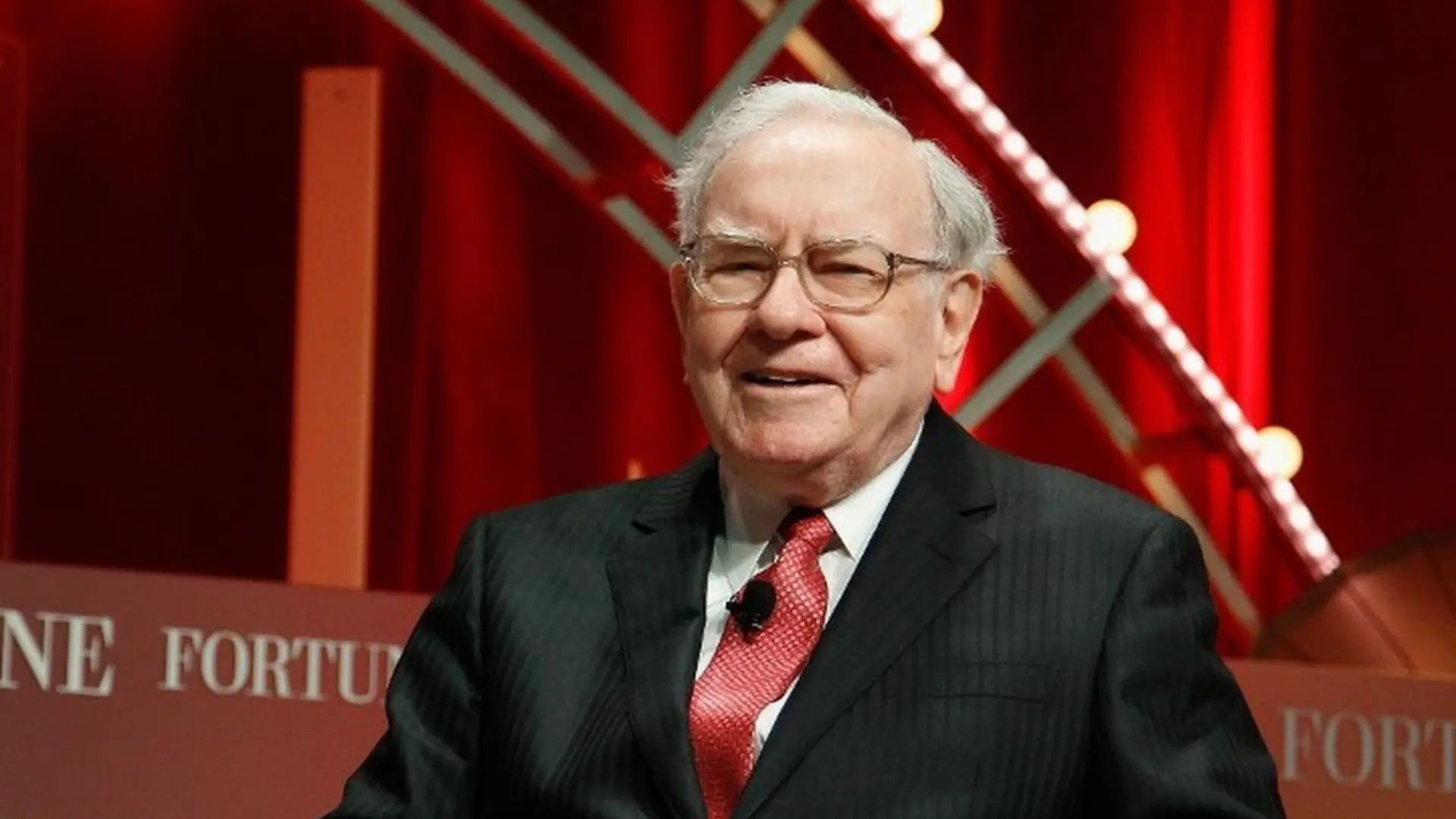
Legendary investor Warren Buffett has sent a cautionary message to the stock market as he approaches retirement from his role as CEO of Berkshire Hathaway.
This signal is reflected in his investment moves over recent years, particularly through large-scale stock sell-offs.
Buffett announced his resignation as Berkshire Hathaway’s CEO in May, with the transition set to take effect at the end of 2025. Greg Abel has long been identified as his successor, although the timing of the leadership transition had not previously been clearly defined.
During the annual shareholders’ meeting in May, Buffett emphasized that he would not alter Berkshire’s management approach until his tenure concludes.
This statement includes the oversight of Berkshire’s equity portfolio, which is currently valued at more than US$300 billion.
Despite remaining committed to long-term investing principles, Buffett’s actions have signaled heightened caution regarding stock market conditions heading into 2026.
According to The Motley Fool (Sunday, December 28, 2025), Buffett has built one of the world’s largest stock portfolios during his more than 60-year leadership of Berkshire Hathaway since 1965, primarily using insurance premium float.
Today, Berkshire Hathaway’s equity portfolio is valued at approximately US$315 billion.
That figure could have exceeded US$500 billion had Buffett not aggressively reduced stock holdings over the past three years.
Berkshire Hathaway has recorded net stock sales for 12 consecutive quarters, with total net disposals approaching US$184 billion.
Several major holdings were significantly trimmed. Buffett reduced Berkshire’s stake in Apple by 73%, sold 44% of its Bank of America shares, and cut its Chevron position by 26%. Dozens of other stocks were fully exited from the portfolio.
In contrast, new purchases were relatively limited, consisting mostly of additional investments of several hundred million dollars in existing holdings.
The largest new additions to Berkshire’s portfolio included Chubb, Alphabet, and Sirius XM. The company also increased its stake in Occidental Petroleum by 36%.
The wide gap between stock sales and purchases reflects Buffett’s view that market valuations have become increasingly stretched.
Apple shares currently trade at around 33 times forward earnings, a level that has remained largely unchanged since mid-2024, coinciding with Buffett’s heightened selling activity.
By comparison, Buffett began accumulating Apple shares when the company traded at roughly 10 times forward earnings.
Meanwhile, Bank of America’s price-to-tangible-book ratio is approaching two, a level rarely seen since the global financial crisis.
Valuation pressures are also evident across the broader market. The S&P 500 is trading at approximately 22 times forward earnings, a level seldom observed since the early 2000s.
The cyclically adjusted price-to-earnings (CAPE) ratio has reached 40 for only the second time in history.
Buffett’s favored valuation gauge—the ratio of total market capitalization to GDP, known as the Buffett Indicator—has also climbed well above 200%. Buffett has previously warned that such levels signal elevated risk, dating back to the early 2000s.
Taken together, these actions serve as a warning for investors to exercise greater caution as they approach the 2026 market environment.
Several important lessons can be drawn from Buffett’s recent strategy.
First, investors should not hesitate to lock in profits. Allowing high-quality stocks to compound is sensible as long as the investment thesis remains intact. However, excessive concentration in a single stock increases risk, especially when valuations are elevated.
This was evident at Berkshire Hathaway when Apple once accounted for nearly half of the portfolio’s value. Even after being reduced by nearly three-quarters, Apple still represents about 20% of the portfolio.
Second, maintaining a strong cash position becomes increasingly important as valuations rise. Berkshire’s cash holdings now exceed 50% of its investment assets. While cash carries opportunity costs, it provides downside protection during market downturns and flexibility to seize future opportunities.
Third, hold onto high-conviction investments. Buffett has owned shares of American Express and Coca-Cola since the 1990s without selling a single share for more than 30 years, including during the dot-com bubble and the global financial crisis.
These decisions are grounded in his confidence in the companies’ durable competitive advantages and long-term business prospects.
Source: kompas.com
What do you think about this topic? Tell us what you think. Don't forget to follow Digivestasi's Instagram, TikTok, Youtube accounts to keep you updated with the latest information about economics, finance, digital technology and digital asset investment.
DISCLAIMER
All information contained on our website is summarized from reliable sources and published in good faith and for the purpose of providing general information only. Any action taken by readers on information from this site is their own responsibility.
SHARE
VIEW