





Crypto News
Revealed! Who Owns the Most Bitcoin in 2026? Shocking Data & Top Holders List
/index.php
Berita Terkini - Posted on 02 May 2026 Reading time 5 minutes
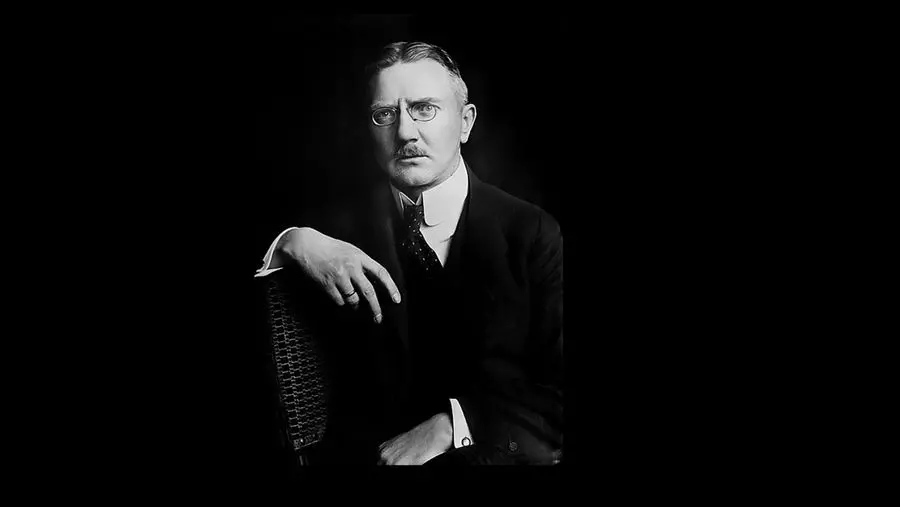
Amid Indonesia’s fragile economic conditions following the war and early independence period, the government in the early 1950s once invited a foreign economist who was widely renowned on the international stage.
This figure was no ordinary individual, but Hjalmar Schacht, a German banker and economist who had served as Minister of Economics and was a trusted associate of Adolf Hitler in rebuilding Germany’s economy before World War II.
At that time, Indonesia was grappling with serious challenges, including high inflation, mounting debt, and incomplete recovery of production activities. The government sought an experienced figure who was considered capable of offering solutions for the newly independent nation.
Schacht became the chosen candidate. According to Britannica, he was born in 1877 and spent most of his career in finance and banking. He gained international recognition when he was appointed head of Germany’s central bank, the Reichsbank, during the Weimar Republic era.
Under his leadership, Germany managed to overcome the severe hyperinflation that struck in the early 1920s. This success significantly elevated his reputation and earned him respect among global economists.
When Adolf Hitler and the Nazi Party rose to power in January 1933, Schacht was retained and tasked with restoring the national economy. One of his most notable policies was the MEFO bill financing scheme, which allowed the German government to fund industrial projects without directly printing money. Schacht ensured that financial instruments were backed by real production to maintain control over money circulation.
As outlined in the research titled The Nazi Economy Prepared for War by Exploiting Everyone (2026), this policy successfully revived industrial activity and significantly reduced unemployment. For Schacht, the role of a central bank extended beyond maintaining stability; it also involved ensuring continuous economic activity. He believed that inflation could be controlled as long as circulating money was directed toward real production.
Between 1933 and 1938, Germany’s economy recovered rapidly, achieving near full employment and reestablishing itself as a major economic power in Europe. However, this success eventually led to conflict between Schacht and Hitler.
When inflationary pressure began to rise due to large-scale military expansion, Schacht urged a halt to excessive spending, but Hitler rejected the proposal. This disagreement ultimately resulted in Schacht’s dismissal from the Reichsbank on January 19, 1939.
Although he was removed from the Nazi inner circle, Schacht’s name remained associated with Germany’s economic recovery.
After World War II, he was tried at the Nuremberg Trials but was ultimately acquitted. Despite his reputation being overshadowed by his association with the Nazi regime, his expertise in economics continued to be recognized internationally.
For this reason, Schacht later became known as an economic consultant for various developing countries facing crises, including Indonesia.
For Indonesia at that time, Hjalmar Schacht was regarded as a figure with the experience and capability to help address the economic turmoil following the war and the early years of independence.
Source: cnbcindonesia.com
What do you think about this topic? Tell us what you think. Don't forget to follow Digivestasi's Instagram, TikTok, Youtube accounts to keep you updated with the latest information about economics, finance, digital technology and digital asset investment.
DISCLAIMER
All information contained on our website is summarized from reliable sources and published in good faith and for the purpose of providing general information only. Any action taken by readers on information from this site is their own responsibility.
SHARE
VIEW