






Saham News
IHSG Today: Market Set for Sharp Moves! Top Stock Picks for Wednesday, May 13, 2026
/index.php
Berita Terkini - Posted on 11 May 2026 Reading time 5 minutes
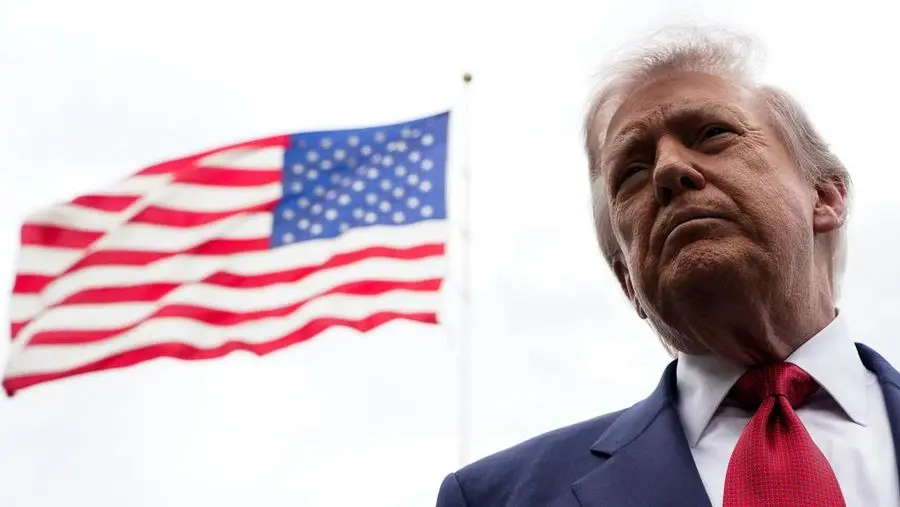
United States President Donald Trump once again rejected Iran’s latest response to Washington’s peace proposal aimed at ending the war, amid escalating tensions in the Strait of Hormuz even though two vessels ultimately succeeded in crossing the strategic shipping route.
Trump openly criticized Tehran’s response through a post on Truth Social on Sunday (May 10, 2026) local time. He described Iran’s reply as completely unacceptable, although he did not elaborate further on the reasons behind his rejection.
“I just read the response from the so-called Iranian ‘Representatives.’ I don’t like it — TOTALLY UNACCEPTABLE,” Trump wrote.
The statement came after Iran submitted an official response to the US proposal, which previously offered a ceasefire before discussions on more sensitive issues, including Iran’s nuclear program, would begin.
Iranian state media reported that the response focused on ending the war across all fronts, particularly in Lebanon, as well as ensuring maritime security in the Strait of Hormuz. However, Iranian state television did not clarify how or when the vital shipping lane would be fully reopened.
The semi-official Tasnim news agency stated that Iran’s proposal included several key demands, namely an immediate end to the war on all fronts, the lifting of the US naval blockade, guarantees against future attacks on Iran, and the removal of sanctions on Tehran, including the US ban on Iranian oil exports.
A report by The Wall Street Journal citing anonymous sources also stated that Iran offered to dilute part of its highly enriched uranium and transfer the remaining stockpile to a third country.
Pakistan, which has long served as a mediator in the conflict, reportedly delivered Iran’s response to the US side. A Pakistani official confirmed the move, while Washington has yet to issue an official statement.
Although the ceasefire has been in place for around a month and the Gulf region has remained relatively calm over the past 48 hours, security threats are still considered significant. Hostile drones were reportedly detected in several Gulf countries on Sunday, indicating that the risk of escalation continues to loom over the region.
Amid the situation, the LNG carrier Al Kharaitiyat owned by QatarEnergy successfully crossed the Strait of Hormuz safely and headed toward Port Qasim in Pakistan, according to shipping analytics company Kpler. The vessel became the first Qatari LNG carrier to pass through the strait since the war began on February 28 following attacks on Iran by the US and Israel.
Sources stated that the voyage received Iran’s approval as part of confidence-building efforts involving Pakistan and Qatar, both of which have acted as mediators.
In addition, a Panama-flagged cargo ship heading to Brazil also successfully crossed the strait through a route designated by the Iranian armed forces. Tasnim reported that the vessel had previously attempted to pass through the Strait of Hormuz on May 4.
Pressure on Trump to quickly end the war continues to intensify ahead of his visit to China this week. The conflict has triggered a global energy crisis and increased threats to the world economy.
Iran continues to restrict most non-Iranian shipping through the Strait of Hormuz, a narrow route that before the war handled roughly one-fifth of the world’s oil supply. The waterway has now become one of the primary pressure points in the conflict.
When asked whether military operations against Iran had ended, Trump gave an ambiguous response.
“They’ve been defeated, but that doesn’t mean they’re finished,” he said in an interview aired Sunday.
Israeli Prime Minister Benjamin Netanyahu also stressed that the war is not over. According to him, major issues related to Iran’s uranium, enrichment facilities, proxy groups, and ballistic missile capabilities still need to be addressed.
“There is much more work to be done,” Netanyahu stated.
In an interview with CBS, Netanyahu said the best way to eliminate enriched uranium would be through diplomacy, although he did not rule out the use of military force.
Meanwhile, Iranian President Masoud Pezeshkian emphasized that his country would not submit to enemy pressure.
“Iran will never surrender to its enemies,” Pezeshkian wrote on social media. He also stressed that Iran would “strongly defend its national interests.”
At the same time, plans to establish an international mission to secure shipping in the Strait of Hormuz drew strong warnings from Tehran.
Although Washington has imposed its own blockade on Iranian vessels since last month, Tehran is believed to still be buying time before issuing a full response to demands for ending the war, which has become increasingly unpopular among US voters due to soaring gasoline prices.
With less than six months remaining before the US congressional elections, US Energy Secretary Chris Wright said the Trump administration continues exploring various ways to lower fuel prices.
“We continue to look for different ideas,” Wright said in an interview with NBC.
However, the US is also facing limited international support. NATO allies rejected Washington’s request to send ships to reopen the Strait of Hormuz without a comprehensive peace agreement and an official international mandate.
Domestically, Trump is also facing pressure from the Democratic Party, which seeks to halt the war through War Powers Act legislation.
Senior Democratic Senator Jack Reed argued that the situation had worsened because of Trump’s own policies.
“This situation became much worse because of Donald Trump’s actions, and now he’s scrambling to find a way out,” Reed told Fox News.
United Kingdom, which is working with France to prepare a maritime security proposal once conditions stabilize, announced on Saturday the deployment of warships to the Middle East. France had previously taken similar measures.
Iranian Deputy Foreign Minister Kazem Gharibabadi warned that the deployment of British, French, or other foreign warships near the Strait of Hormuz under the pretext of “protecting shipping” would be viewed as an escalation and would be met with force.
Responding to the issue, French President Emmanuel Macron stated that France is prepared to support an international mission, but denied any plan for military deployment to reopen the Strait of Hormuz.
“We never envisioned a military deployment to reopen Hormuz,” Macron said.
Source: cnnindonesia.com
What do you think about this topic? Tell us what you think. Don't forget to follow Digivestasi's Instagram, TikTok, Youtube accounts to keep you updated with the latest information about economics, finance, digital technology and digital asset investment.
DISCLAIMER
All information contained on our website is summarized from reliable sources and published in good faith and for the purpose of providing general information only. Any action taken by readers on information from this site is their own responsibility.
SHARE
VIEW