


Crypto News
Revealed! Who Owns the Most Bitcoin in 2026? Shocking Data & Top Holders List
/index.php
Berita Terkini - Posted on 01 August 2025 Reading time 5 minutes
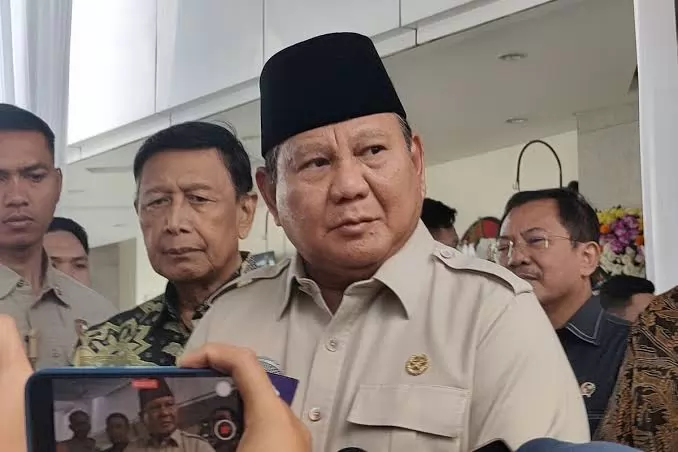
President Prabowo Subianto has resolved the controversy surrounding the blocking of dormant (inactive) bank accounts by the Financial Transaction Reports and Analysis Center (PPATK). The decision to reopen the frozen accounts was made shortly after PPATK's head, Ivan Yustiavandana, was summoned to meet with the President on Wednesday (July 30, 2025).
Ivan arrived at the Presidential Palace Complex at around 5:00 PM WIB, stating that he had been invited by the President for a meeting. However, he did not disclose what topics would be discussed during the session with the Head of State.
Approximately two hours later, at 7:04 PM, Ivan was seen leaving the palace after concluding the meeting with President Prabowo. He declined to reveal the outcomes of their discussion, only saying that many issues had been addressed. He directed all inquiries about the meeting to Minister of State Secretary Prasetyo Hadi and Cabinet Secretary Teddy Indra Wijaya.
“I was called by the President, but I didn’t know the agenda,” said Ivan as he entered the meeting room on Wednesday (30/7/2025).
Following the meeting, PPATK began unblocking a number of previously frozen dormant accounts, responding to public concern, especially from individuals whose accounts were affected.
“Yes, [the dormant account block has been lifted],” said PPATK’s Head of Public Relations Natsir Kongah to Bisnis on Thursday (31/7/2025). He explained that the reopening of accounts was prompted by growing anxiety in the community.
Natsir previously explained that millions of dormant accounts had been reported by banks. Out of these, more than half have already been reactivated. Additionally, more than 140,000 accounts were blocked by PPATK in May 2025, based on data from February 2025.
He said that some accounts had already been reactivated, and the rest could be reopened if the account holders provided confirmation. Natsir also stated that the blocked accounts had been inactive for over 10 years, with total funds reaching IDR 428.6 billion. Many of these accounts had outdated or incomplete identity information.
In addition to complaints from customers, the blocking policy also drew criticism from multiple stakeholders. The unilateral nature of the decision was deemed inappropriate.
Rio Priambodo, Executive Secretary of YLKI (Indonesian Consumers Foundation), said that the public was shocked by PPATK's action of freezing thousands of accounts inactive for just three months. This sparked concerns about the safety of customers' funds.
Rio laid out four key points from YLKI’s perspective:
PPATK must provide clear and transparent information to consumers about the reasons behind the blocking and explain what steps customers can take to restore access to their funds.
The agency must be selective and cautious in blocking accounts, as financial matters are highly sensitive, especially when the accounts were intentionally inactive for long-term saving purposes.
There should be a notice period before freezing accounts, so customers are informed, can prepare accordingly, and are given the chance to dispute the action if their account is safe and not involved in any criminal activity, such as online gambling.
Unblocking should not be made difficult, and YLKI urged PPATK to guarantee that consumer funds remain intact and are not reduced by a single cent during the freeze.
Senior economist Didik J. Rachbini also criticized recent government policies, particularly the arbitrary blocking of dormant accounts by PPATK. He described the action as irresponsible and improper.
He argued that PPATK acted beyond its authority by freezing accounts that had been inactive for three months, under the pretext of preventing their misuse for criminal activity or money laundering. According to Didik, such actions were inconsistent with PPATK’s actual role and responsibilities.
He emphasized that PPATK is not a law enforcement agency and should not unilaterally block accounts en masse. If there is a Suspicious Financial Transaction Report (LTKM), PPATK must coordinate with and report it to the appropriate legal authorities, rather than acting independently.
Source: bloombergtechnoz.com
What do you think about this topic? Tell us what you think. Don't forget to follow Digivestasi's Instagram, TikTok, Youtube accounts to keep you updated with the latest information about economics, finance, digital technology and digital asset investment.
DISCLAIMER
All information contained on our website is summarized from reliable sources and published in good faith and for the purpose of providing general information only. Any action taken by readers on information from this site is their own responsibility.
SHARE
VIEW