






Saham News
IHSG Still in the Red, But These Stocks Are Worth Watching-Opportunities Amid Pressure
/index.php
Bisnis | Ekonomi - Posted on 23 October 2025 Reading time 5 minutes
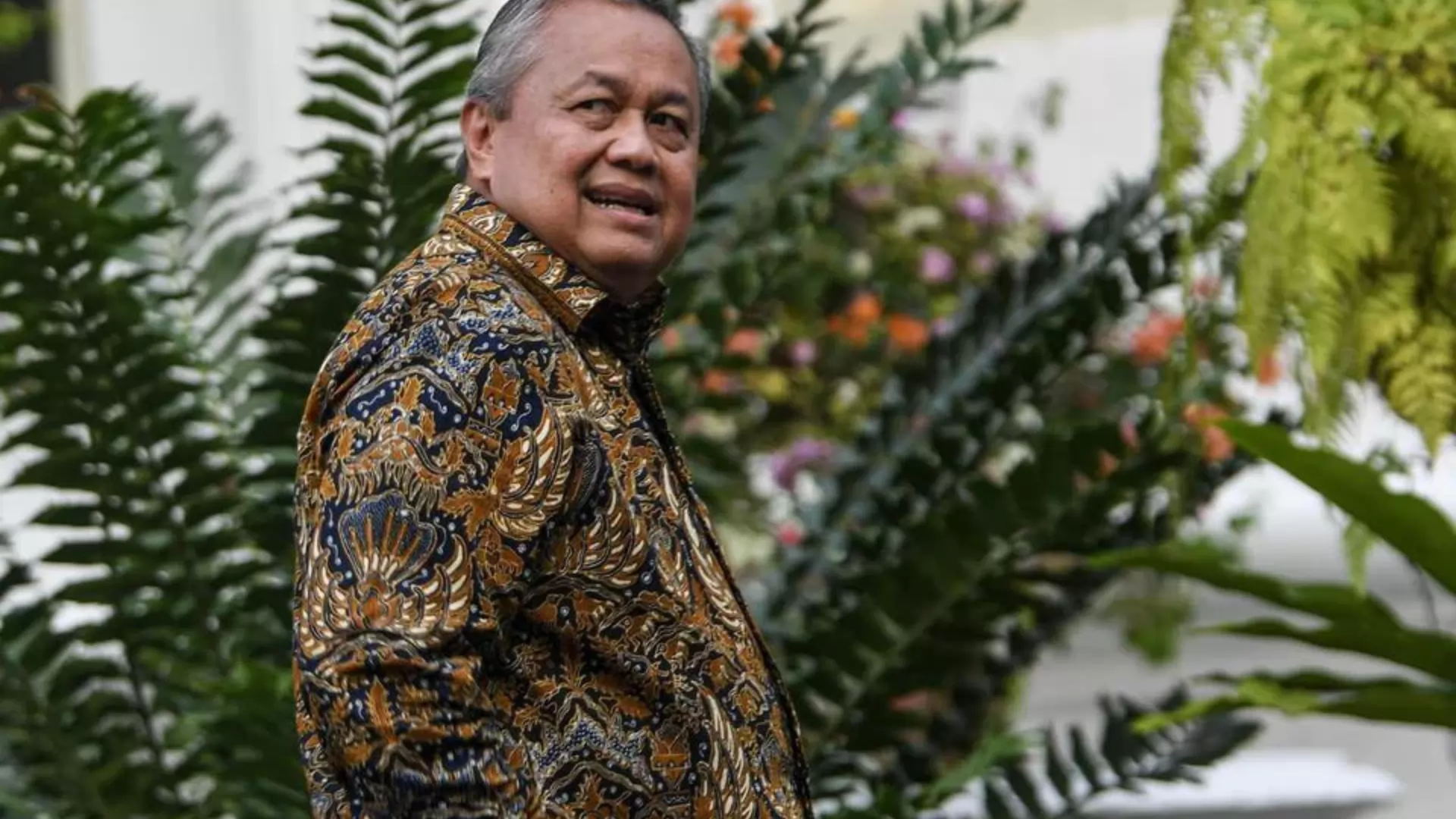
Bank Indonesia Governor Perry Warjiyo candidly discussed the impact of Finance Minister Purbaya Yudhi Sadewa’s policy, which placed IDR 200 trillion in idle government funds into the banking system.
The funds, classified as Excess Budget Balance (SAL) previously held at Bank Indonesia, were transferred to five state-owned banks starting September 12, 2025.
Perry explained that, consistent with Purbaya’s objective, the placement of funds into Bank Negara Indonesia (BBNI), Bank Mandiri (BMRI), Bank Tabungan Negara (BBTN), Bank Rakyat Indonesia (BBRI), and Bank Syariah Indonesia (BRIS) immediately boosted liquidity in the national economy.
“An accommodative monetary stance combined with the placement of government SAL funds in banks has contributed to an increase in money supply,” Perry said during an online press conference following the central bank’s board meeting, Thursday (October 23, 2025).
He further noted that Purbaya’s policy had driven growth in base money. Adjusted M0—which takes into account the impact of lower reserve requirements (GWM) resulting from macroprudential liquidity incentive policies (KLM)—grew 18.58% year-on-year (yoy) in September 2025.
This growth rate was higher than the 13.16% yoy increase in unadjusted M0 during the same period.
“The rise in adjusted M0 was primarily influenced by fiscal expansion reflected in the Net Claims on Government (NCG),” Perry explained.
Meanwhile, broad money (M2) growth reached 7.59% yoy in August 2025, up from 5.46% yoy in January 2025, driven by the continued effects of BI’s monetary easing since September 2024.
From the component side, narrow money (M1) rose from 7.25% to 10.51%, in line with an increase in currency in circulation from 10.30% to 13.41% over the same period.
“The increase in M2 mainly stemmed from higher Net Foreign Assets (NFA). Looking ahead, the money supply is expected to continue rising alongside fiscal expansion,” he said.
Despite ample liquidity, Perry highlighted that credit disbursement remained below expectations. Lending rates have not declined as rapidly as anticipated, and loan growth remains relatively weak.
“Bank Indonesia believes that bank lending rates must continue to decline in line with our easing measures and the government’s SAL placements in banks,” Perry stated.
Following a 150-basis-point BI rate cut since September 2024, money market rates have already dropped—INDONIA fell 204 bps from 6.03% at the start of 2025 to 3.99% as of October 21, 2025.
Similarly, SRBI yields for 6-, 9-, and 12-month tenors dropped 251 bps, 254 bps, and 257
bps, reaching 4.65%, 4.67%, and 4.70% respectively.
Two-year government bond yields (SBN) fell 218 bps from 6.96% to 4.78%, while ten-year yields declined 132 bps from 7.26% in January to 5.94%.
However, bank lending rates have decreased at a slower pace. Despite the BI rate cut, one-month deposit rates only fell 29 bps to 4.52%, partly due to special rates granted to large depositors accounting for 26% of total third-party funds (DPK).
Meanwhile, loan rates decreased just 15 bps, from 9.20% to 9.05%.
As a result, credit growth reached only 7.70% yoy in September 2025, slightly up from 7.56% yoy in August.
“Credit demand remains subdued due to corporate caution, reliance on internal funding, and persistently high lending rates,” Perry remarked.
Unutilized loan facilities (undisbursed loans) remained substantial, totaling IDR 2,374.8 trillion or 22.54% of total credit limits, mostly concentrated in trade, industry, and mining, particularly in working capital loans.
On the supply side, banks’ financing capacity remains robust, supported by a liquid asset-to-deposit ratio (AL/DPK) of 29.29% and deposit growth of 11.18% yoy, aided by fiscal expansion, government fund placements, and BI’s liquidity incentives.
Overall, lending appetite remains healthy, reflected in relatively loose lending requirements, except for consumer and MSME loans, where banks remain cautious due to elevated credit risks.
Perry noted that working capital and consumer loan growth slowed to 3.37% yoy and 7.42% yoy, while investment loans increased to 15.18% yoy. Meanwhile, MSME credit and Islamic financing growth eased to 0.23% yoy and 7.55% yoy respectively.
“Going forward, Bank Indonesia will continue to enhance coordination with the government and the Financial System Stability Committee (KSSK) to boost bank lending growth and improve interest rate structures,” Perry concluded.
Source: cnbcindonesia.com
What do you think about this topic? Tell us what you think. Don't forget to follow Digivestasi's Instagram, TikTok, Youtube accounts to keep you updated with the latest information about economics, finance, digital technology and digital asset investment.
DISCLAIMER
All information contained on our website is summarized from reliable sources and published in good faith and for the purpose of providing general information only. Any action taken by readers on information from this site is their own responsibility.
SHARE
VIEW