




Crypto News
Revealed! Who Owns the Most Bitcoin in 2026? Shocking Data & Top Holders List
/index.php
Bisnis | Ekonomi - Posted on 18 September 2023 Reading time 5 minutes
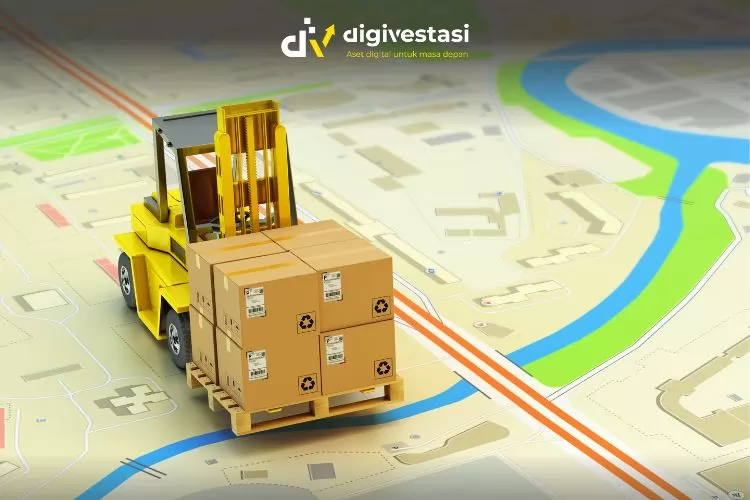
The Indonesian Chamber of Commerce and Industry (Kadin) has emphasized that the government's target to strengthen the national logistics system, a part of the Indonesia Emas 2045 vision, must be accompanied by a swift delivery ecosystem.
Erwin Raza, Deputy Head of Logistics and Supply Chain at Kadin, noted that the government has already released the National Logistics Cost for 2022, which stands at 14.29% of GDP. This is significantly lower than the 25.15% of GDP calculated in 2013.
"It wouldn't mean much if the logistics costs are low but the speed is sluggish, reliability is lacking, and there are risks involved," Erwin Raza said during the New Era of Logistics Costs for Indonesia Emas 2045 event in Jakarta on Thursday, September 14, 2023.
Erwin stated that companies or business entities would consider several factors in their logistics activities, including reliability, speed, risks, safety, and resilience.
These elements should also serve as performance indicators for annual logistics assessments, in addition to transportation and warehouse costs, inventory storage expenses, and administrative costs.
"We need to formulate this together; this is our challenge, my fellow association members, to address this," Erwin said.
Furthermore, he expressed hope for the establishment of a National Logistics Authority to oversee logistics in Indonesia. He believed that the focus on addressing logistics issues was already divided among various ministries due to existing regulations.
Hence, he suggested the need for specific logistics-related regulations to resolve these issues, but he emphasized that a thorough assessment should precede their implementation.
"The transport aspect falls under the Ministry of Transportation, with regulations related to shipping, road transport, and railways. Meanwhile, matters concerning delivery are handled by the Ministry of Communication and Information Technology (Kominfo), and warehousing is under the Ministry of Trade (Kemendag), so it's a bit complex," he explained.
The Ministry of National Development Planning/Bappenas has conducted measurements of national logistics costs using the Input-Output methodology. In calculating the national logistics costs, three primary components are considered: transportation costs, warehousing and inventory storage expenses, and administrative costs.
The calculation of national logistics costs, as well as efforts to formulate future policies aimed at enhancing national logistics cost efficiency, requires constructive input from various key stakeholders, including government ministries/agencies, academics, logistics associations, and development partners.
What is your opinion on this topic? Share your opinion with us. Don't forget to follow Digivestasi's Instagram, TikTok, and Youtube accounts to stay updated with the latest information about economics, finance, digital technology, and digital asset investment.
|
DISCLAIMER All information contained on our website is summarized from reliable sources and published with good intentions and the sole purpose of providing general information. Any actions taken by readers based on the information from this website are their own responsibility. |
What do you think about this topic? Tell us what you think. Don't forget to follow Digivestasi's Instagram, TikTok, Youtube accounts to keep you updated with the latest information about economics, finance, digital technology and digital asset investment.
DISCLAIMER
All information contained on our website is summarized from reliable sources and published in good faith and for the purpose of providing general information only. Any action taken by readers on information from this site is their own responsibility.
SHARE
VIEW