






News Update
Alleged Railway Safety Mismanagement in Indonesia: Facts, Risks & Impact Explaineds
/index.php
Bisnis | Ekonomi - Posted on 15 September 2025 Reading time 5 minutes
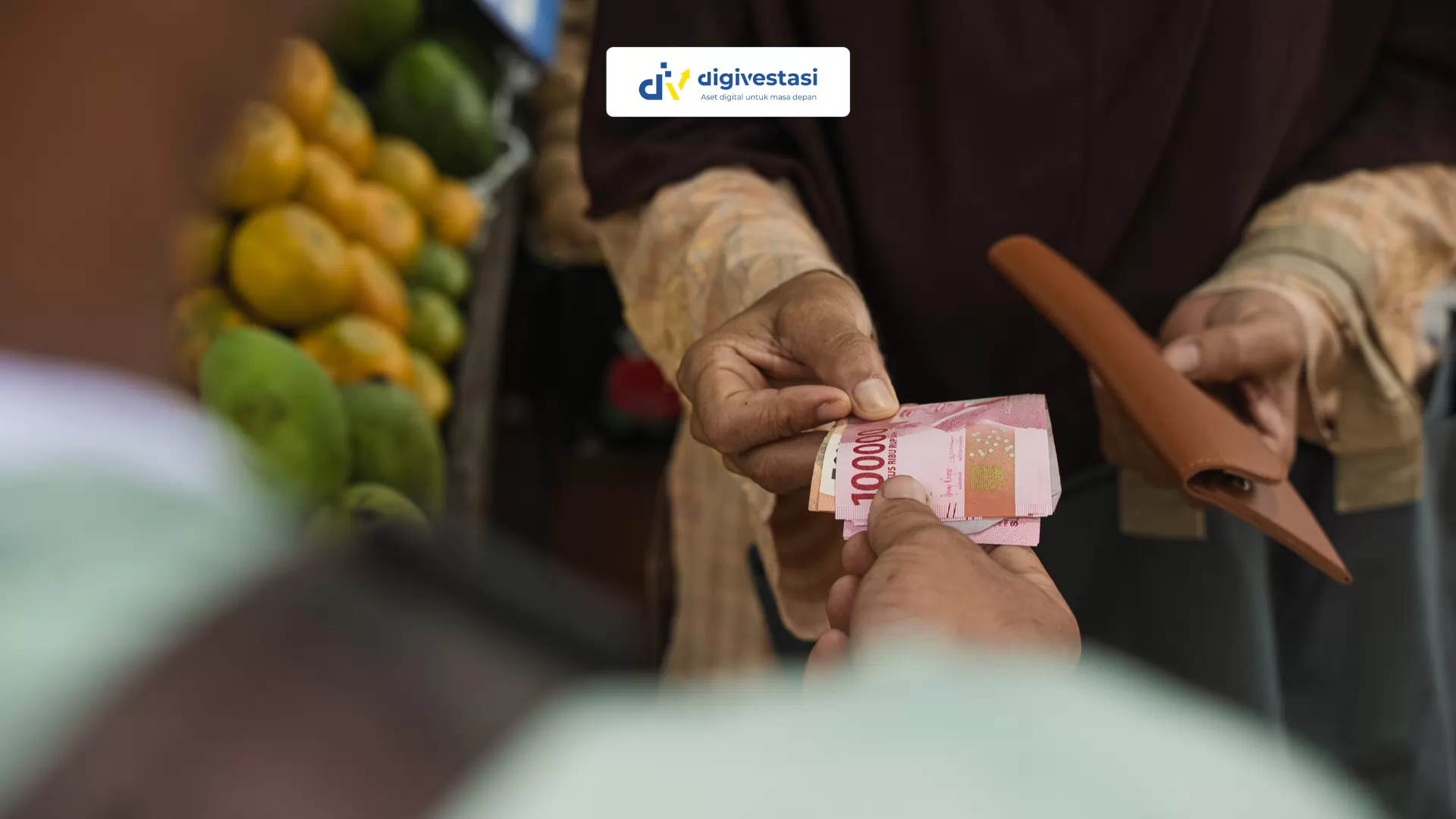
Micro, small, and medium enterprises (MSMEs) are currently facing significant challenges. To provide support, the government has transferred Rp200 trillion from Bank Indonesia’s account to state-owned Himbara banks, which is expected to act as a fresh stimulus.
As announced, the Ministry of Finance (MoF) has disbursed Rp200 trillion to five banks. This fund was previously idle in Bank Indonesia (BI).
Minister of Finance Purbaya Yudhi Sadewa stated that the transfer began on Friday (September 12). The five banks receiving the funds are PT Bank Rakyat Indonesia (Persero) Tbk, PT Bank Mandiri (Persero) Tbk, PT Bank Negara Indonesia Tbk, PT Bank Tabungan Negara (Persero) Tbk, and PT Bank Syariah Indonesia Tbk.
Among them, BRI, Mandiri, and BNI each received Rp55 trillion, while BTN obtained Rp25 trillion, and BSI got Rp10 trillion through on-call deposits. This allocation refers to the Minister of Finance Decree (KMK) No. 276/2025 regarding the placement of state funds to manage cash surpluses and deficits in order to support government programs and boost economic growth.
Purbaya emphasized that the funds must be directed to support the real sector and cannot be used to purchase government securities (SBN). Accordingly, the five recipient banks are required to report their usage every month.
MSMEs, which play a vital role in driving Indonesia’s real economy, are expected to benefit from this measure. If the funds are quickly circulated into the economy, purchasing power may strengthen, giving MSMEs greater momentum. Part of the fund is also targeted to be distributed as MSME credit.
However, the slowdown in bank lending to MSMEs and weakening household purchasing power have raised concerns. Bank Indonesia data for July 2025 recorded MSME loans at Rp1,397.4 trillion, growing only 1.6% year-on-year, compared to 2.0% growth in June (Rp1,404.0 trillion).
This marks the lowest growth since May 2021, when MSME credit rose just 0.5% amid the Covid-19 pandemic. Although post-pandemic recovery lifted growth to 18% in mid-2022, the trend has slowed since 2023, falling to 7–9%, then 3.0% at the end of 2024, before plunging to 1.6% in July 2025.
The figure is even weaker than early in the pandemic when MSME credit managed to return to positive growth after contracting in early 2021. This highlights the alarming downturn compared to the rapid expansion of previous years.
By business scale, micro enterprises remain the largest contributor to MSME loans. In July 2025, micro business loans stood at Rp617.3 trillion, contracting 3.1% yoy, a deeper decline than June’s 2.5%. This sharp drop in the micro segment has become the main driver of overall slowdown.
In January 2024, micro loans were still growing 24.5% yoy, but by April 2024 growth had fallen to 0.8%, and entered contraction in January 2025. In other words, what once drove MSME expansion has now turned into the main drag.
According to Bank Indonesia’s Financial Stability Review (August 2025), the slowdown is linked to banks’ cautious stance, particularly in the micro segment. This is partly due to the rising non-performing loan (NPL) ratio for MSMEs, which increased to 4.41% in the first half of 2025 from 4.04% in the same period of 2024.
Another factor is declining purchasing power among low-income groups, reducing repayment capacity for micro MSMEs. Limited cash flow has worsened credit risk, prompting banks to be more selective.
At the same time, a funding gap exists between MSME financing needs and actual credit disbursement. Loan demand remains high, especially in the Rp50–100 million range, but banks tend to favor small-scale MSMEs considered more adaptable, flexible, and stable compared to micro businesses.
MSMEs are not an ordinary sector—they are the backbone of Indonesia’s economy. With more than 64 million enterprises, MSMEs contribute over 60% of GDP and employ the majority of the workforce.
During the 1998 crisis, MSMEs kept the economy afloat when large corporations collapsed. Similarly, in the 2020 Covid-19 pandemic, MSMEs sustained domestic consumption despite severe constraints.
Now, under global and domestic pressures, MSMEs are again expected to play this role, but with much heavier challenges due to limited access to financing.
Indonesia has past experience with direct government support. In 2021, through the National Economic Recovery (PEN) program, Rp162.40 trillion was allocated for MSMEs and cooperatives, including:
Interest subsidies for KUR and non-KUR loans (Rp42.17 trillion),
Productive Micro Business Assistance (BPUM) (Rp15.36 trillion),
Fund placement (Rp30.25 trillion),
Credit guarantees (Rp2 trillion).
This policy successfully prevented MSMEs from collapsing during the pandemic, sustained positive household consumption, and saved millions of jobs.
Given the current circumstances, new measures are urgently needed. Finance Minister Purbaya Yudhi Sadewa plans to reallocate Rp200 trillion of MoF funds from BI to Himbara banks. This scheme is expected to expand banking liquidity for productive lending, particularly to MSMEs. If implemented effectively, the policy could provide a fresh lifeline for millions of small businesses struggling to access capital.
Source: cnbcindonesia.com
What do you think about this topic? Tell us what you think. Don't forget to follow Digivestasi's Instagram, TikTok, Youtube accounts to keep you updated with the latest information about economics, finance, digital technology and digital asset investment.
DISCLAIMER
All information contained on our website is summarized from reliable sources and published in good faith and for the purpose of providing general information only. Any action taken by readers on information from this site is their own responsibility.
SHARE
VIEW