





Crypto News
Revealed! Who Owns the Most Bitcoin in 2026? Shocking Data & Top Holders List
/index.php
Bisnis | Ekonomi - Posted on 23 July 2025 Reading time 5 minutes
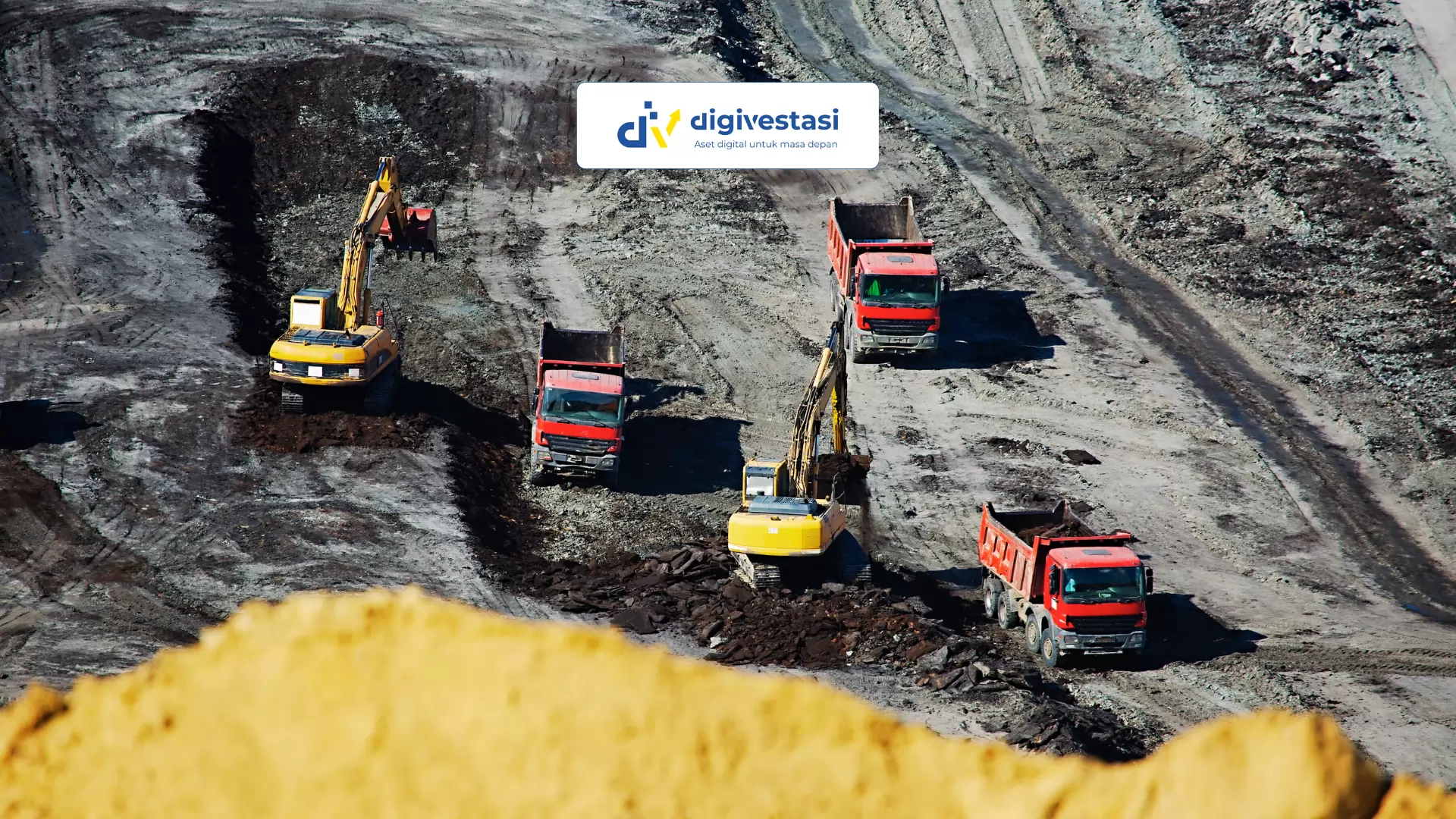
The Nickel Association revealed that not all smelters can survive amid oversupply and plunging nickel prices.
Only companies with specific traits—such as advanced technology or diversified products—are deemed capable of weathering this storm.
This statement addresses the downturn in Indonesia’s nickel industry, which has led to mass layoffs of thousands of workers in the sector.
Arif Perdana Kusumah, President of the Indonesian Nickel Industry Forum (FINI), outlined four key attributes of Indonesian nickel smelters that might enable them to survive under current conditions:
Large production capacity, enabling them to endure and expand within the nickel industry.
Advanced technology, such as rotary kiln electric furnace (RKEF) and high-pressure acid leach (HPAL), to boost production efficiency and quality.
Product diversification, producing items like ferro-nickel, nickel matte, and nickel sulfate, offering market flexibility.
Strategic partnerships with experienced large firms, helping to strengthen production capacity and competitiveness.
Arif emphasized that the nickel industry is dynamic and influenced by global price shifts, government policies, and technological advances. Therefore, smelters must continuously adapt and enhance production to stay competitive.
Arif explained that the global nickel market is experiencing oversupply due to Indonesia's excessive output, fueled by a slowdown in China's economy—the largest nickel consumer—and exacerbated by geopolitical tensions, especially the US–China trade war.
As a result, nickel prices have been under pressure for more than two years: LME prices have dropped 46%, and SMM prices have declined 35% since 2023.
“For many refining enterprises, this situation is challenging, and some have been forced to reduce or slow production, affecting their economic viability,” Arif stated.
Separately, Bhima Yudhistira of Celios noted that smelters most likely to survive hold long-term mining contracts and access high-grade ore, along with broad export markets—not just China but also Europe and the US.
Bhima predicted that the crisis among nickel smelters would persist into next year, as the natural selection process has only just begun. He critiqued that the government's downstream nickel development (2016–2021) was misaligned—smelters were rapidly constructed without considering environmental capacity or ore supply.
According to APNI data, Indonesia currently has 120 RKEF-based pyrometallurgy smelters requiring 584.9 million tons of nickel ore and 27 HPAL hydrometallurgy plants needing 150.3 million tons.
Several large smelters have suspended parts of their operations since the start of the year due to narrowing profit margins, stemming from decreased demand for stainless steel in China and rising production costs. Four smelters have been identified undertaking partial shutdowns, including:
PT Gunbuster Nickel Industry (GNI) and PT Indonesia Tsingshan Stainless Steel (ITSS) in IMIP, Central Sulawesi;
Huadi Virtue Dragon Nickel Industry (VDNI) in Konawe, Southeast Sulawesi;
PT Huadi Nickel Alloy Indonesia (HNAI).
Source: bloombergtechnoz.com
What do you think about this topic? Tell us what you think. Don't forget to follow Digivestasi's Instagram, TikTok, Youtube accounts to keep you updated with the latest information about economics, finance, digital technology and digital asset investment.
DISCLAIMER
All information contained on our website is summarized from reliable sources and published in good faith and for the purpose of providing general information only. Any action taken by readers on information from this site is their own responsibility.
SHARE
VIEW