

Saham News
Bank Stocks Under Pressure from Foreign Selling-Risk or Buying Opportunity?
/index.php
Crypto News - Posted on 04 February 2026 Reading time 5 minutes
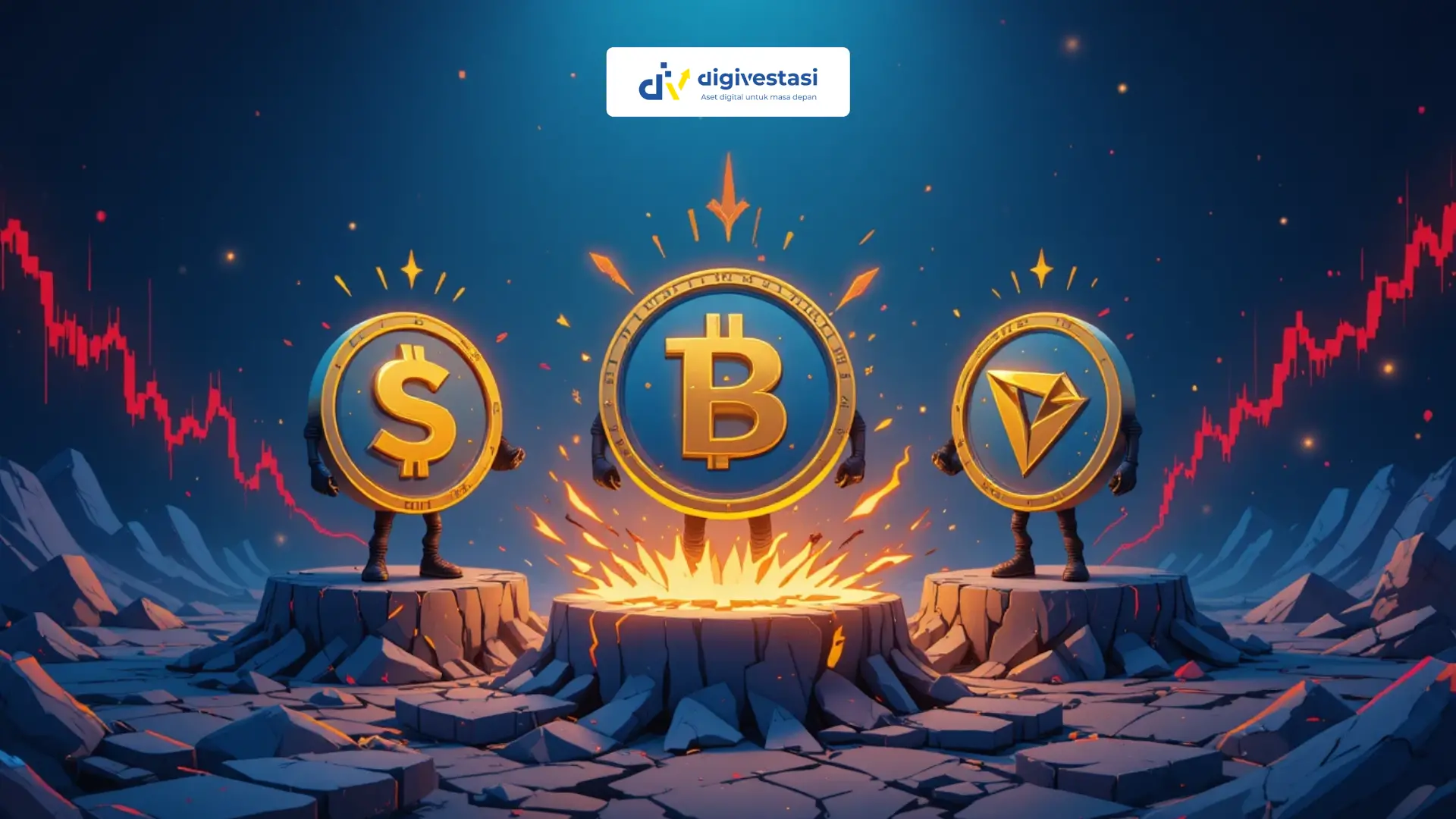
The crypto market entered early February 2026 under heightened volatility amid a surge in leverage usage. The ongoing tug-of-war between buyers and sellers has sharply increased liquidation risk, particularly among altcoins where Long and Short positions are heavily concentrated around key price levels.
Recent data indicate that Solana (SOL), Hyperliquid (HYPE), and TRON (TRX) are the three altcoins most exposed to large-scale liquidations during the first week of February.
Over the past four days, total global liquidations have exceeded US$5 billion—the highest level since October last year—draining retail trading capital and potentially weakening short-term market momentum.
Under these conditions, highly leveraged altcoins with fragile liquidity become the most vulnerable, as even minor price movements can trigger cascading liquidations on both sides of the market.
Solana briefly fell below the US$100 mark, which has served as its strongest support level over the past two years. Liquidation heatmaps reveal a dominance of Short positions in this zone, signaling market expectations of further downside.
However, this selling pressure faces several supportive factors. Throughout January, the Solana network recorded the addition of more than 10 million new addresses per day, driven by meme coin activity, the expansion of the USD1 stablecoin, and growing interest in privacy-related features.
According to liquidation estimates, a rebound above US$113 could trigger Short liquidations of up to US$500 million. Conversely, a drop toward US$86 could wipe out more than US$142 million in Long positions. This dynamic leaves SOL highly sensitive to short-term sentiment shifts.
Hyperliquid stands out amid broader market weakness. Since bottoming on January 21, HYPE has rallied roughly 50%, even as many other altcoins printed new lows.
Liquidation data show a relatively balanced distribution between Long and Short positions. Around the US$31 level, a move up to US$35.5 could liquidate Short positions worth US$80 million, while a decline to US$26 could trigger Long liquidations of a similar magnitude.
Despite positive sentiment driven by a 90% cut in team token allocations and rising trading volumes, capital flow data point to notable outflows. Limited liquidity leaves HYPE susceptible to sharp price swings over short periods.
TRON is facing negative sentiment following allegations of market manipulation linked to its founder during the project’s early stages. The issue has fueled short-term concerns and boosted Short interest in the derivatives market.
Should TRX rise above US$0.31, Short positions worth up to US$29 million could be liquidated. On the other hand, on-chain metrics indicate that network demand remains robust.
Tron Inc has reportedly increased its holdings by more than 173,051 TRX at an average price of US$0.29, while weekly active addresses have climbed to 24.68 million. The clash between negative sentiment and solid network fundamentals makes TRX’s near-term direction difficult to predict.
Rising liquidation activity affects not only prices but also the broader market structure. As retail capital is depleted, buying power weakens, allowing volatility to persist without a clear directional bias.
In such an environment, altcoin price movements tend to be fast and aggressive, with liquidation risks looming on both the Long and Short sides. Early February represents a critical phase to determine whether the market can regain stability or slip into a prolonged period of stagnation.
What is liquidation in crypto trading?
Liquidation occurs when a leveraged trading position is automatically closed because the trader’s margin is no longer sufficient due to adverse price movements.
Why is early February 2026 particularly prone to liquidations?
Because volatility is rising, leverage is heavily concentrated at key price levels, and market liquidity has thinned following the previous downturn.
Are liquidations always negative for the market?
In the short term, liquidations amplify volatility. Over the long term, however, they can flush out excessive risk and help the market form a healthier structure.
Which altcoins are most vulnerable during high volatility?
Altcoins with high leverage, thin liquidity, and divided market sentiment are typically the most exposed to mass liquidations.
How can traders reduce liquidation risk?
Traders generally lower leverage, apply strict risk management, and closely monitor major support and resistance levels.
Source: indodax.com
What do you think about this topic? Tell us what you think. Don't forget to follow Digivestasi's Instagram, TikTok, Youtube accounts to keep you updated with the latest information about economics, finance, digital technology and digital asset investment.
DISCLAIMER
All information contained on our website is summarized from reliable sources and published in good faith and for the purpose of providing general information only. Any action taken by readers on information from this site is their own responsibility.
SHARE
VIEW