



News Update
US Warship Hit by Missile! Why Trump Pulled Troops & What It Means
/index.php
Bisnis | Ekonomi - Posted on 18 June 2025 Reading time 5 minutes

Japan's exports declined for the first time in eight months in May 2025, amid pressure from U.S. President Donald Trump’s tariff policies. This decline has added to fears of a potential recession, especially after Japan's economy contracted in the first quarter of this year. According to Japan’s Ministry of Finance data reported by Bloomberg on Wednesday (June 18, 2025), export value fell by 1.7% year-on-year, mainly due to reduced shipments of cars, steel, and mineral fuels.
Although this drop was less than the median analyst forecast of 3.7%, the data indicates exporters may have absorbed the tariff impact by cutting prices, as export volume actually rose by 1.8%.
Japan’s imports also dropped by 7.7%, primarily in crude oil and coal. The country posted a trade deficit of ¥637.6 billion (approximately US$4.4 billion), worsening from the previous month and marking the second straight monthly deficit. This situation amplifies concerns that Japan's economy may shrink again in the second quarter of 2025, potentially leading to a technical recession. Meanwhile, domestic consumption remains weak as inflation continues to outpace wage growth.
“The tariff impact is now becoming visible, which was already anticipated,” said Taro Saito, Chief Economist at the NLI Research Institute. He pointed out that the surprise came from the resilience in export volume. This, he explained, implies that Japanese firms are reducing prices to stay competitive, which hurts profitability—a negative sign overall.
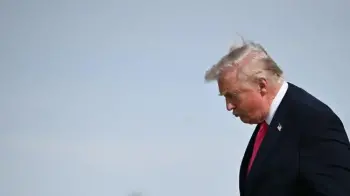
President Trump has imposed a 25% tariff on imports of Japanese cars and auto parts, and a base 10% tariff on all other Japanese goods. In early June, steel and aluminum tariffs were also doubled to 50%. These tariffs remain in effect for now after Trump and Japanese Prime Minister Shigeru Ishiba failed to reach an agreement during a sideline meeting at the G7 Summit, despite two months of bilateral negotiations. The comprehensive 10% tariff is scheduled to rise to 24% on July 9, as announced in April.
Japanese car exports to the U.S., which account for about a quarter of total shipments to that country, fell 24.7% in value but only 3.9% in volume. This shows that Japanese automakers cut prices to maintain export volume. Overall, Japan’s exports to the U.S. declined by 11.1%, while imports from the U.S. dropped by 13.5%. Still, Japan maintained a trade surplus of ¥451.7 billion with the U.S., which remains a focal point in Washington’s efforts to rebalance trade.
Meanwhile, Japan’s exports to China fell 8.8%, while exports to Europe rose by 4.9%. “The key question in Japan-U.S. negotiations is whether further tariff hikes can be avoided. I expect the 10% tariff to stay, but if it rises back to 24%, the economic impact will be significant,” Saito said.
In May, the yen averaged 143.97 against the U.S. dollar, about 7.4% stronger than a year earlier. A stronger yen typically reduces the value of dollar-denominated exports when converted to yen. Amid the uncertainty over tariffs, the Bank of Japan (BOJ) decided to hold its benchmark interest rate steady on Tuesday (June 17, 2025), and to slow down the pace of its planned bond purchase reduction set to begin next year.
In its policy statement, the BOJ noted high uncertainty regarding the global trade policy’s effects on the economy and inflation. BOJ Governor Kazuo Ueda stated during a press conference after the decision that despite worsening market sentiment, real economic indicators remain relatively solid, and the BOJ would continue monitoring data for its next policy actions. The recent weak export data is expected to be closely watched by the BOJ going forward.
Prime Minister Ishiba’s failure to secure a trade agreement during the G7 Summit—a meeting he had previously deemed pivotal—could damage his political standing ahead of the national election expected next month. However, he may still gain public support by asserting that protecting national interests is more important than hastily signing an unfavorable deal.
Ishiba has approved a series of emergency measures to support households and businesses in coping with the tariff impact. With inflation continuing to burden the public, he is now considering direct cash assistance, while opposition parties call for cuts to the sales tax.
Source: bisnis.com
What do you think about this topic? Tell us what you think. Don't forget to follow Digivestasi's Instagram, TikTok, Youtube accounts to keep you updated with the latest information about economics, finance, digital technology and digital asset investment.
DISCLAIMER
All information contained on our website is summarized from reliable sources and published in good faith and for the purpose of providing general information only. Any action taken by readers on information from this site is their own responsibility.
SHARE
VIEW