






News Update
US Warship Hit by Missile! Why Trump Pulled Troops & What It Means
/index.php
Bisnis | Ekonomi - Posted on 21 May 2025 Reading time 5 minutes
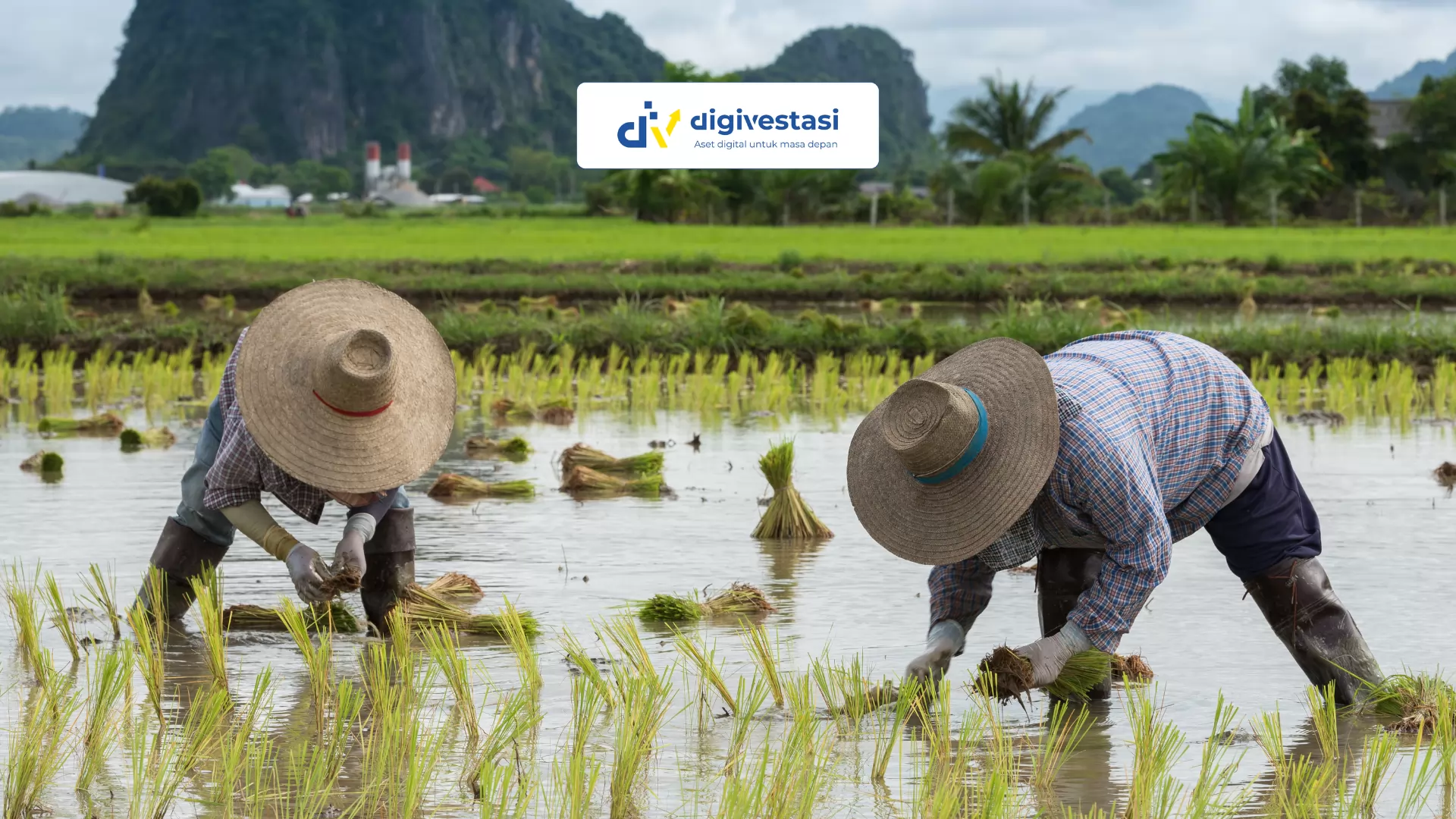
Indonesia Torn Between Rice Self-Sufficiency and Export Plans to Malaysia
Indonesia's ambition to achieve rice self-sufficiency is now overshadowed by emerging talks of exporting rice to Malaysia. The government appears indecisive in responding to the request from its neighboring country. Initially, the request made by Malaysia's Minister of Agriculture and Food Security, YB Datuk Seri Haji Mohamad bin Sabu, was flatly rejected, only to be reconsidered later.
“When he (the Malaysian minister) asked, ‘Can we import rice from Indonesia?’, I told him that for now we are prioritizing domestic stock,” said Indonesia’s Agriculture Minister Amran Sulaiman during a meeting at his office in South Jakarta on Tuesday (April 22).
However, about three weeks later, the tone changed. It was not Amran who reversed the stance, but Deputy Agriculture Minister Sudaryono, a former aide to President-elect Prabowo Subianto. Sudaryono revealed that talks with Malaysia had progressed and that potential importers had already been engaged to facilitate the transaction.
Malaysia is expected to receive 2,000 tons of rice per month from Indonesia — a modest volume compared to their usual imports from other countries.
“We’re preparing everything. Essentially, if the President (Prabowo) gives the order, we’ll be ready to proceed,” Sudaryono confirmed on Thursday (May 15).
Meanwhile, Coordinating Minister for Economic Affairs Zulkifli Hasan stated that the Indonesian government is focusing on bolstering its rice reserves, which currently stand at 3.7 million tons in Bulog’s warehouses — the largest since the agency was founded in 1969.
However, this intent seems at odds with President Prabowo’s message of generosity toward neighboring nations in need. “If a neighbor is short on rice, we help. That’s what the President said. Besides, we’re happy our stock is abundant right now,” Zulkifli said on Friday (May 16).
Malaysia sees Indonesia as technologically more advanced in agriculture, sparking interest in importing its rice. Dr. Atris Suyantohadi of Gadjah Mada University confirmed that since 2023, the Agriculture Ministry has adopted a specific formula focusing on rice and corn via government support programs.
“This has led to increased rice production and domestic surplus,” he told CNNIndonesia.com on Monday (May 19).
However, Atris stressed the importance of further evaluation of food technology implementation to ensure continued productivity. He supported the rice export plan to Malaysia, provided it is based on actual surplus and does not compromise local needs.
“Transparency in national stock data and stable local prices must remain top priorities,” he emphasized.
Yusuf Wibisono, Director of Next Policy, explained that the large government rice reserve (CBP) opens the door for export, especially since rice cannot be stored indefinitely. He identified three reasons for the surplus: leftover imported stock from last year, the high government purchasing price (HPP) for unhusked rice without quality conditions, and favorable rainfall aiding optimal harvests.
Still, Yusuf argued that exporting rice is not the best move. Instead, he urged the government to quickly release the CBP through market operations under the SPHP program.
He cited two main concerns. First, Bulog’s rice is costly due to high HPP and unconditional procurement, which results in lower quality and requires further processing. Second, international rice prices are currently falling, making Indonesian rice uncompetitive globally.
The Illusion of Self-Sufficiency
Yusuf warned that a large rice stock doesn’t necessarily indicate self-sufficiency. He advised the government to remain focused on improving long-term production. “Rice output may decline in the second half of 2025 as the rainy season ends,” he said.
He recommended enforcing effective minimum pricing policies, preventing land-use change, and supporting family farms — especially in Java, the country’s food basket.
According to Yusuf, Indonesia’s rice production has remained stagnant over the past five years, falling from 31.31 million tons in 2019 to 30.37 million tons in 2024.
Food policy analyst Syaiful Bahari analyzed Malaysia’s rice import needs, which average 250,000 tons per month or 3 million tons annually. A 2,000-ton monthly supply from Indonesia is thus minimal.
Malaysia relies mainly on Vietnam, India, and Thailand, especially since global prices now sit between US$390 and US$450 per ton. He emphasized that this export gesture should be seen more as diplomatic goodwill rather than regional trade competitiveness.
Syaiful also highlighted that Indonesia’s annual consumption stands at 30–32 million tons, while current reserves only cover about one to two months of that demand.
He advised that true self-sufficiency can only be assessed after consistent performance for 3–5 years. For now, harvests from 10.6 million hectares must yield 56 million tons of unhusked rice to count as recovery.
“Next, raise the yield per hectare from 5.5 to 6 or 7 tons. That would give us 70 million tons of production annually. Only then can we truly say we’re self-sufficient,” he added.
While a 3-million-ton stockpile sounds significant, it’s only half of the safe reserve target — ideally 20–25% of national consumption. If that level is met, Indonesia can begin exporting like India or Vietnam.
Eliza Mardian of CORE Indonesia appreciated Bulog’s proactive efforts in sourcing rice directly from farmers. If sustained, this could lead to a 3-million-ton surplus by year’s end. Yet she cautioned that Bulog’s warehouse capacity is limited, and prolonged storage may impact quality.
She advised measured exports based on actual — not projected — production. “Exporting rice without caution could trigger speculative price increases. News of exports alone can affect market psychology,” she warned.
Conversely, she also discouraged excessive stockpiling, which could degrade rice quality and waste government funds.
Source: cnnindonesia.com
What do you think about this topic? Tell us what you think. Don't forget to follow Digivestasi's Instagram, TikTok, Youtube accounts to keep you updated with the latest information about economics, finance, digital technology and digital asset investment.
DISCLAIMER
All information contained on our website is summarized from reliable sources and published in good faith and for the purpose of providing general information only. Any action taken by readers on information from this site is their own responsibility.
SHARE
VIEW