




News Update
Alleged Railway Safety Mismanagement in Indonesia: Facts, Risks & Impact Explaineds
/index.php
Bisnis | Ekonomi - Posted on 15 September 2023 Reading time 5 minutes
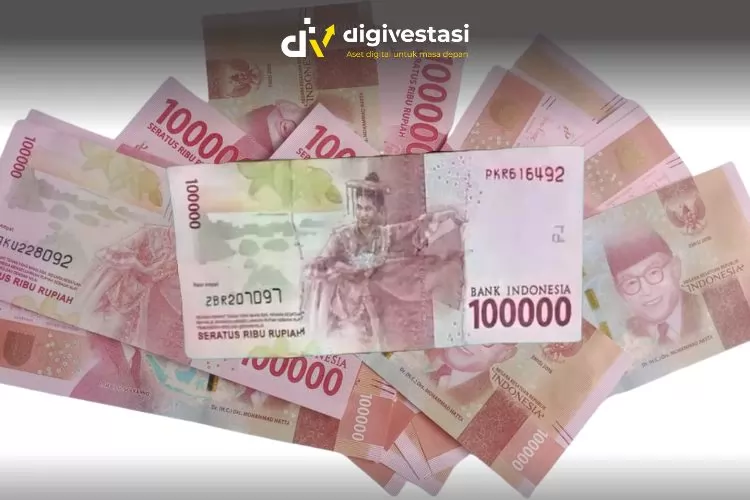
The current practice of rupiah mutilation is causing concerns among the public. This is because this practice mixes genuine currency with counterfeit money, which can deceive people.
The practice of rupiah mutilation is increasingly detrimental to the public because this money cannot be exchanged at Bank Indonesia (BI) offices, according to the explanation provided by the BI Communication Department.
One of the criteria for exchanging damaged or defective rupiah is that the currency must have the same serial number on its notes. However, in the practice of rupiah mutilation, the currency notes have two different serial numbers since they are composed of both genuine and counterfeit money.
Furthermore, another requirement for exchanging rupiah is that the paper currency must be larger than two-thirds of its original size. If it does not meet this criterion, the money cannot be exchanged.
The BI Communication Department stated, "If the physical Rupiah currency is equal to or less than 2/3 (two-thirds) of its original size, no replacement will be provided."
Additionally, BI will not provide a replacement for damaged or defective rupiah currency if the damage is suspected to be intentional.
Rupiah mutilation itself is classified as the destruction and counterfeiting of currency. The BI Communication Department explained, "This is because it involves counterfeit money and intentionally damaged money, making it non-exchangeable."
However, for those who receive mutilated rupiah currency, BI encourages them to visit the nearest BI representative office. The BI Communication Department stated, "Individuals who suspect any indication can come and consult with the nearest Bank Indonesia office."
Rupiah mutilation is a criminal act. Erwin Haryono, the Head of the BI Communication Department, emphasized that rupiah mutilation practices are considered criminal actions as they are seen as attempts to counterfeit money.
Erwin said, "The actions shown in the video can be considered a criminal act, seen as an attempt to counterfeit money, and there are penalties, so this is not a trivial matter."
Penalties related to the circulation of counterfeit money are regulated in Law Number 7 of 2011 concerning Currency. Article 25 in Law Number 7 of 2011 states that anyone who buys or sells damaged, cut, destroyed, and/or altered rupiah can be sentenced to a maximum of 5 years in prison and fined up to Rp 1 billion.
Erwin added, "If it is not counterfeiting money, this action can still be considered damaging the rupiah and will have serious legal consequences."
What is your opinion on this topic? Share your opinion with us. Don't forget to follow Digivestasi's Instagram, TikTok, and Youtube accounts to stay updated with the latest information about economics, finance, digital technology, and digital asset investment.
|
DISCLAIMER All information contained on our website is summarized from reliable sources and published with good intentions and the sole purpose of providing general information. Any actions taken by readers based on the information from this website are their own responsibility. |
What do you think about this topic? Tell us what you think. Don't forget to follow Digivestasi's Instagram, TikTok, Youtube accounts to keep you updated with the latest information about economics, finance, digital technology and digital asset investment.
DISCLAIMER
All information contained on our website is summarized from reliable sources and published in good faith and for the purpose of providing general information only. Any action taken by readers on information from this site is their own responsibility.
SHARE
VIEW