


News Update
US Warship Hit by Missile! Why Trump Pulled Troops & What It Means
/index.php
Bisnis | Ekonomi - Posted on 24 June 2025 Reading time 5 minutes

Geopolitical tensions in the Middle East have escalated once again following an official announcement from the United States confirming its direct involvement in armed conflict with Iran. Aerial strikes launched by U.S. forces on three major Iranian nuclear facilities—Fordow, Natanz, and Isfahan—have become the latest shockwave rattling global financial markets, including in Indonesia.
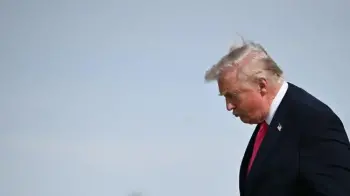
President Donald Trump, via a post on the Truth Social platform on Saturday night (June 21, 2025) local time, stated that the military operation was successful, with full payload bombs dropped on Iran’s most heavily guarded uranium enrichment sites.
“Full payload BOMBS dropped on the main site, Fordow. All aircraft are now safely on their way back. Congratulations to our incredible American soldiers. No military on Earth can do what ours can. NOW IT’S TIME FOR PEACE!” Trump posted, as quoted by Al Jazeera.
Despite the call for peace, financial markets remain jittery. The U.S.’s direct involvement is seen as a major escalation that could expand the open war between Iran and Western allies.
Ariston Tjendra, market analyst and President Director of PT Doo Financial Futures, believes that this current environment is making global investors more cautious.
He noted that in the short term, the Indonesian rupiah is likely to stay under pressure against the U.S. dollar, as investors pull back from riskier assets such as equities and emerging market currencies.
“We’ll have to wait and see how Iran reacts. Will they dare to escalate the conflict by retaliating?” Ariston said in an interview with Kompas.com on Sunday (June 22, 2025).
He pointed out that in a previous incident, when Iran launched a missile attack on Israel, tensions quickly cooled off because there was no prolonged counterattack. In that scenario, market confidence was restored, and risk assets regained traction.
But for now, he believes tension remains elevated, pushing investors toward safer assets.
“If Iran manages to bring its allies into the conflict and initiates further retaliation, it will likely have a negative impact on financial markets. Safe haven assets like gold and the U.S. dollar will surge,” he added.
Ariston warned that as long as the conflict remains unresolved, investors will continue seeking refuge in safe haven instruments, putting prolonged pressure on the rupiah.
“The USD/IDR exchange rate may continue to hover above the 16,200 mark in the short term,” he noted.
According to Ariston, what the market is now waiting for is a single thing: Iran’s reaction. If Iran chooses not to retaliate, tensions could ease again as they did previously.
However, if Iran opts for retaliation and pulls other nations into the conflict, markets could suffer deeper corrections.
“In the short run, the rupiah is likely to remain weak against the U.S. dollar,” he said.
Over the medium to long term, market players will evaluate whether this conflict threatens global energy supply chains or puts pressure on foreign exchange reserves of emerging economies, which could significantly affect their macroeconomic stability.
Source: kompas.com
What do you think about this topic? Tell us what you think. Don't forget to follow Digivestasi's Instagram, TikTok, Youtube accounts to keep you updated with the latest information about economics, finance, digital technology and digital asset investment.
DISCLAIMER
All information contained on our website is summarized from reliable sources and published in good faith and for the purpose of providing general information only. Any action taken by readers on information from this site is their own responsibility.
SHARE
VIEW