






Saham News
Bank Central Asia (BBCA) Extends $17T IDR Loan to DCII Owned by Toto Sugiri-What's the Impact?
/index.php
Edukasi - Posted on 06 May 2025 Reading time 5 minutes
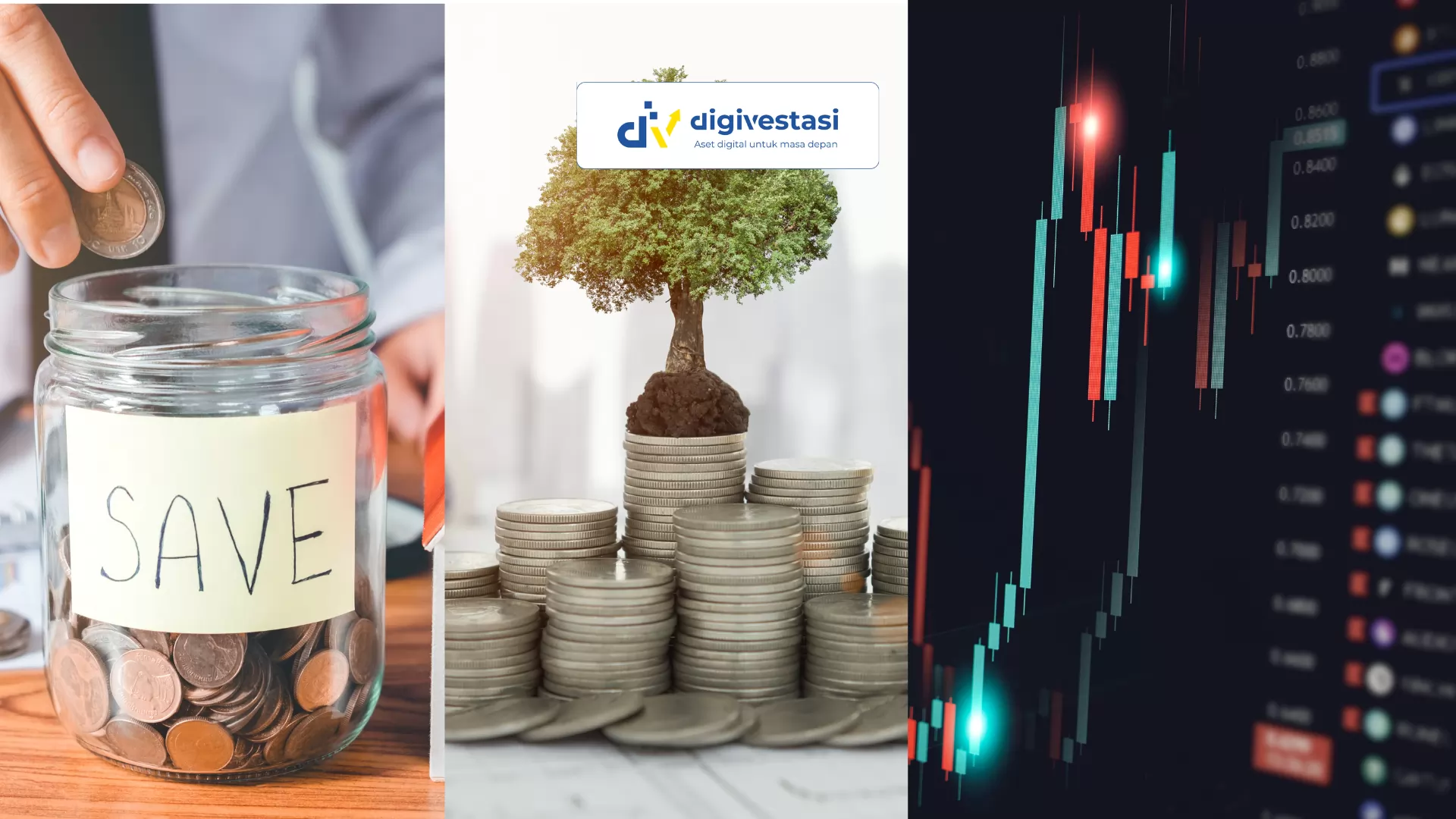
Millennials and Gen Z Face a Choice: Saving, Investing, or Trading?
In the modern financial world, many young people, especially Millennials and Gen Z, are wondering about the best option between saving, investing, or trading. Each of these choices has distinct characteristics and risks, so it is crucial to understand each option before making a decision.
According to a report from the Financial Services Authority (OJK), Indonesia’s financial literacy rate in 2022 was only 49.68%. This shows that more than half of Indonesia’s population has yet to fully understand financial products like investments and trading.
Saving: A Safe Choice with Limited Returns
Saving in a bank remains a safe and conventional option. However, the returns offered are very low, typically ranging from 0.5% to 1% per year, and often lower than the annual inflation rate, which is between 2.5% and 4%. Nonetheless, saving is still necessary for emergency funds and short-term needs.
Investing: The Right Choice for Medium to Long-Term Goals
Investment products like mutual funds, stocks, bonds, and digital gold are increasingly popular as ways to grow wealth. For instance, stock mutual funds can offer average returns of 8-12% per year, much higher than the returns from saving.
According to Bareksa.com, mutual fund products can now be accessed with investments starting as low as Rp10,000, making them an ideal choice for beginners. However, investing still carries risks, such as stock price declines due to market conditions. Therefore, investing is more suitable for long-term goals, especially over three years, to manage market volatility.
Trading: Quick Profit Potential but High Risk
Trading, including stocks, cryptocurrency, and forex, offers the potential for faster profits compared to long-term investing. However, the risk of losses is also very high without the proper strategy and good risk management.
Data from CoinDesk shows that about 70% of retail crypto traders incur losses in their first year due to a lack of education and emotional control. Therefore, trading is more suitable for individuals who already have emergency funds, understand technical analysis, and are prepared to face high volatility, especially in the crypto market like Bitcoin, which can experience price changes of up to several percentage points in a short period.
Solution: Align Your Choice with Your Goals and Risk Profile
The best approach in choosing between saving, investing, or trading is to:
Define your financial goals (short-term, medium-term, or long-term).
Assess your personal risk tolerance.
Allocate funds proportionally for each goal.
Example of Fund Allocation:
Emergency fund and daily needs → Savings.
Goals in 3-5 years (e.g., down payment for a house) → Investment.
Extra funds that are ready for risk → Trading.
Financial Calculation Analysis
Here’s a simulation of fund allocation based on a monthly income of Rp5,000,000:
| Category | Allocation (%) | Amount (Rp) | Instrument | Estimated 1-Year Return |
|---|---|---|---|---|
| Savings | 20% | 1,000,000 | Bank savings | ~Rp10,000 (1%) |
| Investment | 50% | 2,500,000 | Stock mutual funds | ~Rp250,000 (10%) |
| Trading | 30% | 1,500,000 | Bitcoin/Stocks | ±Rp300,000* (20%) |
*Note: Returns from trading can vary significantly and may be negative. The above figure is a simulation for a 20% profit (relatively conservative for experienced traders).
What do you think about this topic? Tell us what you think. Don't forget to follow Digivestasi's Instagram, TikTok, Youtube accounts to keep you updated with the latest information about economics, finance, digital technology and digital asset investment.
DISCLAIMER
All information contained on our website is summarized from reliable sources and published in good faith and for the purpose of providing general information only. Any action taken by readers on information from this site is their own responsibility.
SHARE
VIEW