



Digital Investment
Finance Minister Signals Bond Stabilization Fund Could Involve Finance Ministry SMVs-What Does It Mean?
/index.php
Teknologi Terkini - Posted on 28 January 2025 Reading time 5 minutes
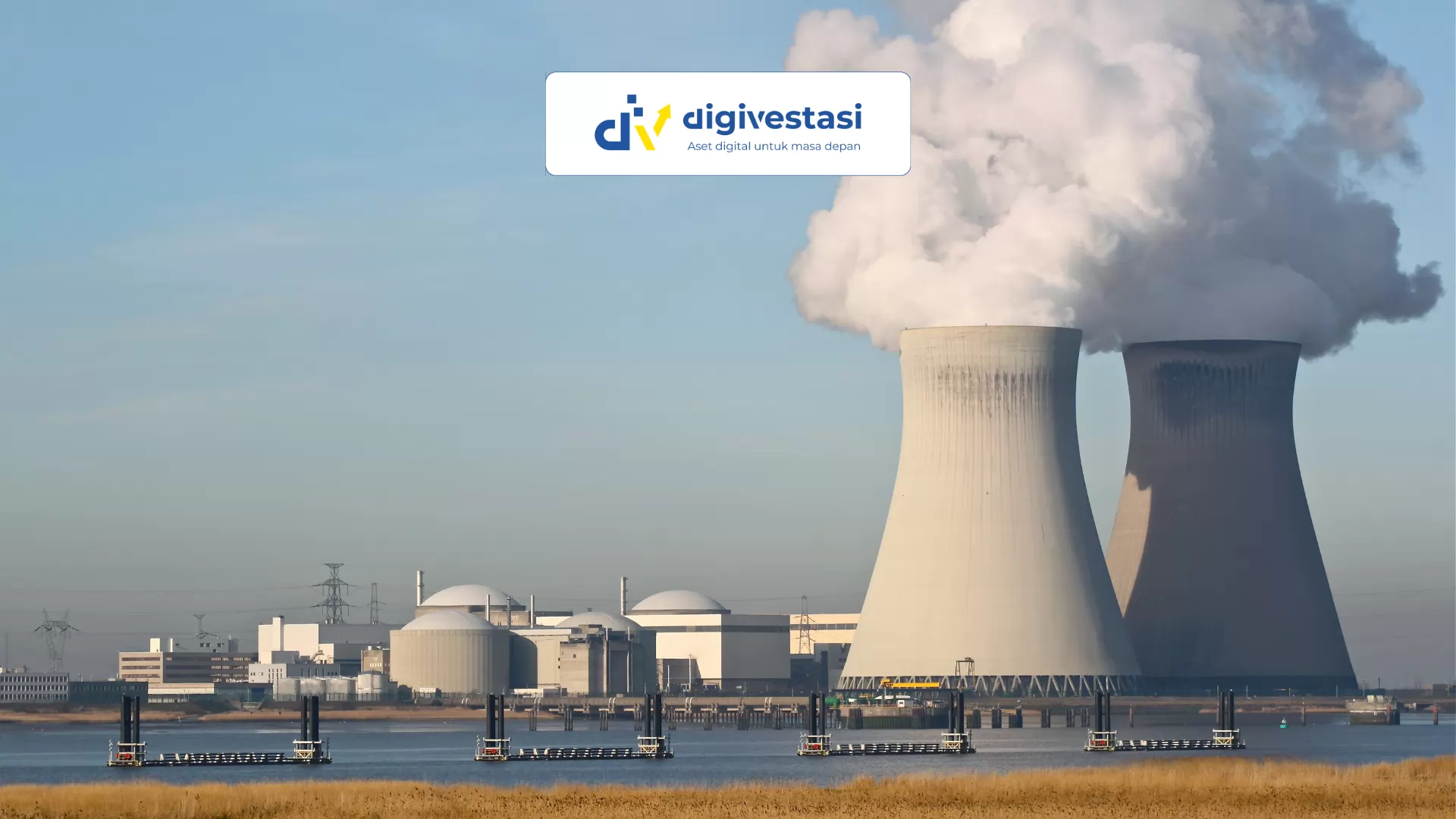
DIGIVESTASI - The government’s efforts to introduce nuclear power plants (NPPs) have come into focus as a strategy to strengthen energy resilience while accelerating the nation’s energy transition. However, a question arises: is this purely a pursuit of energy resilience or merely following global trends?
Discussions around nuclear energy development date back to Indonesia’s first President, Sukarno, who established the National Atomic Energy Agency (BATAN), initially known as the Atomic Energy Institution. Despite almost eight decades since Indonesia’s independence, the realization of nuclear technology for energy remains suboptimal. Could Indonesia’s 8th President, Prabowo Subianto, bring this long-held ambition to fruition?
Recently, the Ministry of Energy and Mineral Resources (ESDM) announced an accelerated timeline for the NPP construction target, moving it forward from 2032 to 2029. This aligns with plans to expand electricity generation capacity by 443 gigawatts (GW) under the 2025-2060 National Electricity General Plan (RUKN). “The development of nuclear power plants will be expedited within the 2029-2032 period,” said Deputy Minister of ESDM, Yuliot Tanjung, on Thursday (January 23, 2025).
This ambitious target aims to support projected economic growth of 8% by 2029. Of the total planned 443 GW of power capacity, approximately 79% is slated to come from renewable energy sources. However, while NPPs are included in the 2025-2060 RUKN, there are currently no investors interested in supporting their development.
NPPs are being designed to replace coal-fired power plants (PLTUs) as part of the government’s long-term energy plan. The National Energy Policy (KEN) outlines two scenarios for a gradual reduction of PLTUs with NPPs: a low scenario targeting 45 megawatts (MW) by 2060 and a high scenario aiming for 54 MW over the same period.
Energy practitioner Satya Widya Yudha emphasized that NPPs are a strategic option to replace PLTUs. This technology is deemed critical for significantly boosting energy diversification, alongside developing other potentials like biomass. “NPPs need to be included in the 2025-2034 Electricity Supply Business Plan (RUPTL) to achieve energy diversification targets,” he said.
Globally, enthusiasm for nuclear energy is growing. According to the International Atomic Energy Agency (IAEA), global nuclear power capacity is projected to increase 2.5 times by 2050 compared to 2024. Additionally, the United Nations Climate Change Conference (COP28) emphasized nuclear energy as part of the Global Stocktake, calling for the accelerated adoption of low-emission technologies to support deep decarbonization.
Europe has turned to nuclear power to combat global warming and ensure energy supply. In the United States, several major technology companies are adopting nuclear energy as a clean energy source. The World Nuclear Association notes that around 440 nuclear reactors operate in 32 countries and Taiwan, with a combined capacity of approximately 390 gigawatts electric (GWe). In 2023, these reactors generated 2,602 TWh, roughly 9% of the world’s electricity needs. By 2025, at least 14 new NPPs in countries like Bangladesh, China, and Turkey are expected to add 14.24 GWe to global capacity.
Zainal Arifin, a lecturer at PLN Institute of Technology, highlighted the need for innovation in NPP development in Indonesia to minimize resource usage, such as raw water, without compromising electricity reliability, safety, or environmental efficiency. “Indonesia can learn from Finland, which has successfully operated the Olkiluoto 3 nuclear plant since 2013 with minimal public resistance, even after the Fukushima tragedy,” Zainal noted in an opinion piece.
He also underscored the importance of ensuring that nuclear fuel and technology supply chains do not make Indonesia dependent on other countries. Such reliance could threaten the sustainability of NPP development.
According to a report by the International Energy Agency (IEA), nuclear energy is forecast to reach a new record by 2025, with over 70 GW of additional capacity under construction. Nuclear power is currently the world’s second-largest low-emission energy source after hydropower, accounting for less than 10% of global electricity supply. With increasing electricity demand—particularly to support data centers and artificial intelligence development—nuclear energy is seen as increasingly vital.
The IEA report, "The Path to a New Era for Nuclear Energy," provides a detailed analysis of NPP challenges and opportunities. According to IEA Executive Director Fatih Birol, the industry faces significant hurdles, including completing nuclear projects on time and effectively managing supply chains. Nevertheless, nuclear development continues as part of global efforts to ensure reliable and sustainable energy supplies.
Temukan berita dan artikel lainnya di Google News
Source: bisnis.com
What do you think about this topic? Tell us what you think. Don't forget to follow Digivestasi's Instagram, TikTok, Youtube accounts to keep you updated with the latest information about economics, finance, digital technology and digital asset investment.
DISCLAIMER
All information contained on our website is summarized from reliable sources and published in good faith and for the purpose of providing general information only. Any action taken by readers on information from this site is their own responsibility.
SHARE
VIEW