





News Update
US Warship Hit by Missile! Why Trump Pulled Troops & What It Means
/index.php
Bisnis | Ekonomi - Posted on 24 June 2025 Reading time 5 minutes
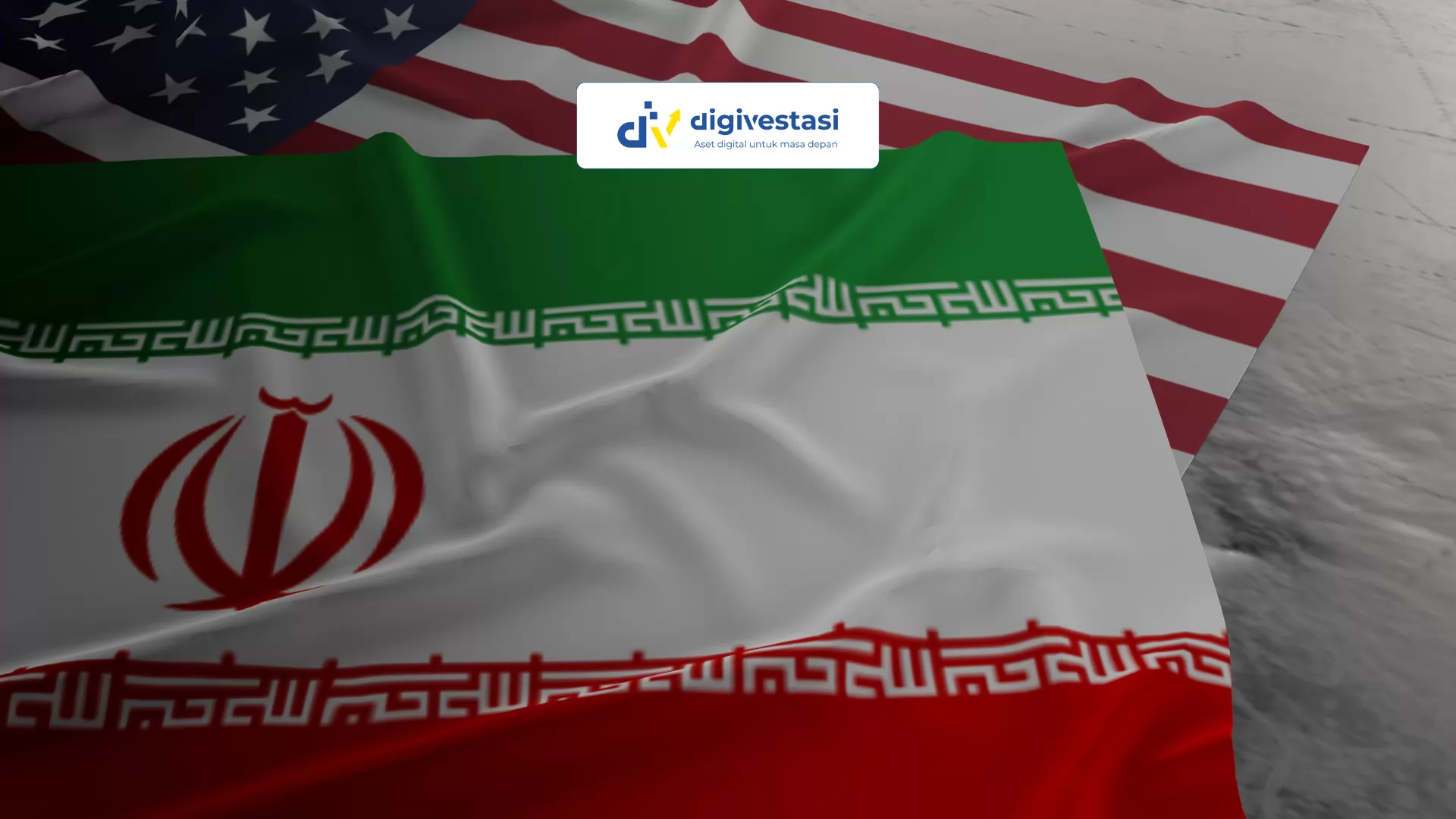
The intensifying conflict in the Middle East between Israel and Iran—coupled with the involvement of the United States (US)—is anticipated to negatively affect Indonesia. This is primarily due to the expected surge in global crude oil prices. As a net oil importer, Indonesia is likely to suffer economically.
Energy analyst Putra Adhiguna from the Institute of Energy Economics and Financial Analysis (IEEFA) stated that the ongoing Middle East conflict has already driven up global oil prices, even since the initial Israeli attacks on Iran.
“Oil prices have been climbing since the first Israeli strike. With US involvement, risks are mounting, especially as both sides are targeting oil and gas infrastructure, including the South Pars gas field in Iran,” Putra told CNBC Indonesia on Monday (June 23, 2025).
In addition, Iran’s decision to shut the Strait of Hormuz could further hinder global oil and gas transportation. The strait accounts for approximately 20% of the world’s hydrocarbon trade.
“Beyond Iran’s own production, the risk of trade disruption through the Strait of Hormuz is enormous, as around 20% of global oil passes through this critical channel. This strait is particularly important as it accommodates massive oil tankers that cannot easily reroute,” he explained.
For Indonesia, the Strait of Hormuz plays a vital role as a transit point for crude oil, fuel, and liquefied petroleum gas (LPG) from Middle Eastern countries. Any disruption here could affect Indonesia’s domestic energy supply.
A spike in global oil prices and supply chain disturbances could also put further pressure on Indonesia’s state budget (APBN), primarily through soaring energy subsidies.
“The risk of ballooning subsidies increases again, underscoring the need for Indonesia to transition to electric vehicles. Rising energy costs will burden both the state budget and consumers,” Putra noted.
He emphasized the importance of swift government action to address potential increases in fuel and LPG prices. Electrification of the transport sector and household consumption is one solution to help ease the fiscal burden.
“This kind of situation keeps recurring. It demands a long-term vision—continuously reducing reliance on fuel and LPG through electrified vehicles and kitchens, and building stronger fuel reserves,” he added.
According to the Central Statistics Agency (BPS), Indonesia imported US$36.27 billion worth of oil and gas in 2024, up from US$35.83 billion in 2023.
This included US$10.35 billion in crude oil imports—slightly down from US$11.14 billion the previous year—and US$25.92 billion in refined products such as fuel, up from US$24.68 billion.
For 2025, the state budget assumes an Indonesian Crude Price (ICP) of US$82 per barrel and a lifting target of 605,000 barrels per day.
Global Oil Prices Surge
On Monday morning (June 23, 2025), global oil prices spiked significantly after Iran officially closed the Strait of Hormuz, following US airstrikes on three major Iranian nuclear sites—Fordow, Natanz, and Isfahan.
According to Refinitiv data at 8:30 AM WIB, Brent crude for the nearest contract rose 2.69% to US$79.08 per barrel, while WTI increased 1.23% to US$75.85 per barrel.
This continued the rally that began the previous week. Since June 12, Brent prices have jumped nearly 14% from US$69.36.
The primary driver behind the price hike is Iran’s closure of the Strait of Hormuz—a narrow waterway linking the Persian Gulf with the Arabian Sea, and the sole maritime exit and entry point for oil in the Gulf region.
This action followed a precision airstrike by the US using B-2 stealth bombers on Saturday night, targeting Iran’s nuclear sites. President Donald Trump called the mission a major success and warned of further retaliation if Iran responded.
“We dropped full payloads on Fordow. All aircraft exited Iranian airspace safely,” Trump posted via Truth Social.
Nearly 20% of the world’s oil supply and most global LNG shipments pass through the Strait of Hormuz. The escalating tensions raise fears of supply disruptions and further spikes in global oil prices.
The closure adds uncertainty in an already volatile market sensitive to Middle East conflict. Analysts predict oil prices could hit US$85–90 in the short term if the strait remains closed for several days.
Goldman Sachs and Rapidan Energy forecast that prices could surpass US$100 per barrel if the closure persists. JPMorgan, however, assesses the risk of a prolonged closure as low, citing that the US may interpret it as a declaration of war.
Iran, OPEC’s third-largest oil producer, produces 3.3 million barrels per day and exported 1.84 million barrels daily last month.
Data from Kpler shows most of Iran’s oil exports go to China, with about half of China’s crude imports passing through the Persian Gulf.
“That would be self-sabotage: closing the Strait would halt Iran’s crude exports to China and cut off a crucial revenue stream,” said Matt Smith, Kpler’s lead oil analyst.
Source: cnbcindonesia.com
What do you think about this topic? Tell us what you think. Don't forget to follow Digivestasi's Instagram, TikTok, Youtube accounts to keep you updated with the latest information about economics, finance, digital technology and digital asset investment.
DISCLAIMER
All information contained on our website is summarized from reliable sources and published in good faith and for the purpose of providing general information only. Any action taken by readers on information from this site is their own responsibility.
SHARE
VIEW