





News Update
US Warship Hit by Missile! Why Trump Pulled Troops & What It Means
/index.php
Bisnis | Ekonomi - Posted on 24 June 2025 Reading time 5 minutes
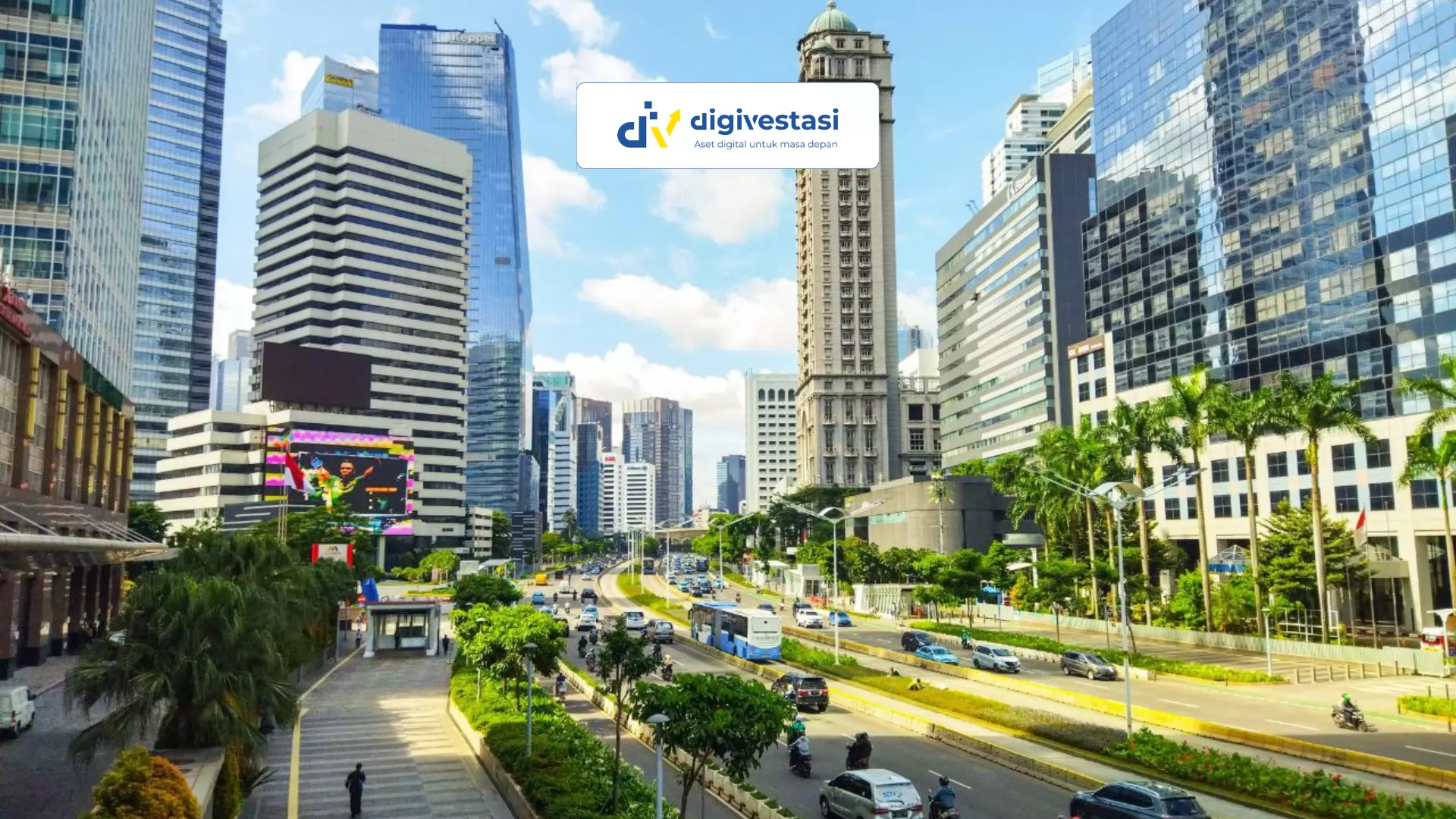
Indonesia's competitiveness has dropped sharply this year, marking the steepest decline in the past four years.
Competitiveness is no longer solely influenced by traditional factors but increasingly by digital readiness and green transition management.
This decline may impact investment, economic growth, and overall societal well-being.
According to the World Competitiveness Ranking 2025 by the Institute for Management Development World Competitiveness Center (IMD WCC) released in June 2025, Indonesia plummeted from rank 27 in 2024 to rank 40 out of 69 countries. This is the most significant drop in the last four years, after previously showing positive trends.
Arturo Bris, IMD WCC Director, emphasized that competitiveness now depends on more than macroeconomic stability or business friendliness. It also hinges on digital preparedness, green transition strategies, and innovative approaches to resilience.
“Today’s leaders are increasingly prioritizing digital readiness, green transition management, and innovative resilience strategies,” Arturo stated in the report on Friday, June 20, 2025.
IMD evaluates competitiveness based on four main pillars: economic performance, government efficiency, business efficiency, and infrastructure. This year, Indonesia’s performance dropped in three of the four areas. Government efficiency declined by 11 ranks to 34, business efficiency dropped 12 spots to 26, and infrastructure fell five positions to 57. Only economic performance remained steady at rank 24.
Government inefficiency is attributed to slow bureaucracy, policy uncertainty, and poor anti-corruption governance. For business efficiency, the main issues are low labor productivity, limited access to finance, and weak corporate management.
Indonesia’s physical and digital infrastructure is still uneven, despite ongoing efforts via National Strategic Projects (PSN). This imbalance, amid global economic slowdown and rising protectionism, hampers competitiveness and growth prospects.
Business players see the competitiveness decline as a warning for the government to accelerate structural reforms and create a more sustainable business climate.
“This decline reflects unresolved structural issues, not merely short-term shocks,” said Shinta Kamdani, Chair of the Indonesian Employers Association (Apindo), to Tempo on Sunday, June 22, 2025.
Shinta highlighted sharp declines in productivity and financing access—previous strengths of Indonesia’s competitiveness. These signal real struggles faced by businesses, such as regulatory uncertainty, high business costs, and the policy-implementation gap.
Regarding government efficiency, Shinta noted that public policy effectiveness has fallen short of business expectations. Bureaucratic delays, regulatory inconsistencies, and underdeveloped education, health, and digital infrastructure have reduced productivity and confidence.
Ajib Hamdani, Apindo’s economic policy analyst, argued the decline stems from the weak role of supporting sectors like human capital, public purchasing power, and regulatory frameworks.
He pointed out Indonesia’s workforce has low productivity, mostly primary school graduates with minimal skills. Only 26% of employers are satisfied with labor performance.
Domestic demand is also weak, with over 60% of the population classified as poor by World Bank standards, despite consumption contributing more than half of GDP.
Current fiscal regulations are under pressure and fail to sufficiently support businesses, while bureaucracy remains sluggish compared to regional peers. Downstreaming programs should extend to people-based sectors—agriculture, plantations, and maritime—to create better jobs.
High logistics costs—over 23% versus the ideal 13%—also obstruct economic efficiency.
Apindo proposes "Indonesia Incorporated", a close partnership between government and business to speed up deregulation, policy reform, labor-intensive sector strengthening, and global strategic policy participation.
The government, however, insists Indonesia’s competitiveness remains manageable. Febrio Kacaribu, Director General of Economic and Fiscal Strategy at the Ministry of Finance, said competitiveness depends on each ranking agency’s methodology. For Indonesia, capital inflow is a better indicator of investor trust.
He emphasized investors’ continued interest in Government Securities (SBN), citing a 10-year downward trend in bond yields as proof of foreign capital inflows.
Nonetheless, the government is committed to resolving issues like licensing, supply chains, and infrastructure through the Danantara initiative, aimed at stakeholder collaboration to improve investment impact.
To boost industrial competitiveness, Minister of Industry Agus Gumiwang advocates the Special Gas Price (HGBT) policy, especially for industries in designated industrial zones. He believes this lowers production costs and supports Law No. 3/2014.
Gas pricing remains a long-standing issue. The ministry is considering gas imports to ensure competitiveness.
The ministry will also encourage industrial zones to help shape regulations that respond to modern challenges. Agus is confident that these zones will continue driving competitiveness and attracting investment.
He assured that relevant ministries—Coordinating Ministry for Economic Affairs, Ministry of Industry, Ministry of Energy and Mineral Resources, and Ministry of Finance—are in full agreement on HGBT, with no disputes.
Still, experts argue the government must focus on addressing inefficiencies in governance and business. Nailul Huda, an economist from Celios, said declines in these two pillars reveal policy failures.
Indonesia’s ICOR (Incremental Capital to Output Ratio) remains high at 6.33 in 2023, compared to Malaysia (2.7), India (3.2), and the Philippines (3.4)—indicating inefficient investment.
Nailul attributed competitiveness weaknesses to domestic issues like rampant thuggery, unclear BRICS and OECD membership direction, and military involvement in the economy—such as the appointment of a Customs Director General from the armed forces.
He emphasized that domestic factors matter more than global uncertainty. Strengthening purchasing power and better investment policies are key to boosting competitiveness.
“Investors will avoid Indonesia unless policy issues are addressed quickly,” said Nailul, noting that Malaysia has risen in the rankings.
He urged action against corruption and thuggery, and called for replacing military appointees in economic sectors with competent civilian professionals. Without urgent reforms, Indonesia risks declining investment, reduced job creation, economic slowdown, and stagnating welfare.
Source: tempo.co
What do you think about this topic? Tell us what you think. Don't forget to follow Digivestasi's Instagram, TikTok, Youtube accounts to keep you updated with the latest information about economics, finance, digital technology and digital asset investment.
DISCLAIMER
All information contained on our website is summarized from reliable sources and published in good faith and for the purpose of providing general information only. Any action taken by readers on information from this site is their own responsibility.
SHARE
VIEW